1 / 1

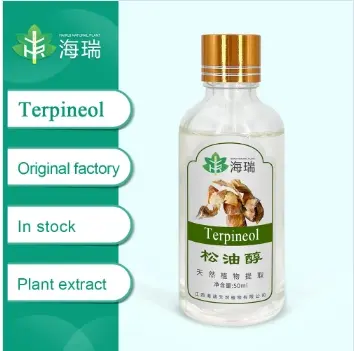
Terpineol, also known as terpineol, is a monoterpene alcohol compound found in nature, such as the peels of citrus fruits and plants. At room temperature, it is a colorless to pale yellow viscous liquid with a distinctive aroma similar to cloves and pine, with a slightly sweet taste.
It is one of the earliest synthetic fragrances to achieve industrial production, with a history of over a century. It is widely used in daily chemical fragrance formulations, with a usage of up to 30% in fragrances for soaps and synthetic detergents. It can be used to create fragrances such as lilac, lily of the valley, acacia, and orange blossom. Pure α-terpineol can also be used to create edible flavors such as lemon, orange, and peach.
It has good solubility for oils, fats, and greases, and can be used as a frother in mineral flotation (such as copper, lead, zinc, and other non-ferrous metal ores, and pulverized coal); a printing and dyeing auxiliary; a pigment wetting agent; an anti-scaling agent for paints; a sheepskin degreasing agent; an epoxy resin leveling agent; an anti-foaming agent for protein glue in the plywood industry; an animal blood preservative; and a leveling agent in baking varnishes, paper coatings, and enamels.
It has antioxidant, anti-inflammatory, and antibacterial properties. In topical pharmaceutical products, it can be used as a local cooling and antipruritic agent to relieve muscle aches, insect bites, and minor burns. It can also be used in some disinfectants. In agriculture, it serves as a natural repellent and pesticide synergist.
Move quickly to fresh air and maintain airway access. If breathing is difficult, administer oxygen. If breathing stops, administer artificial respiration and seek medical attention.
Remove contaminated clothing and rinse skin thoroughly with soap and water. Seek medical attention if any discomfort develops.
Immediately lift the eyelids and rinse thoroughly with plenty of running water or saline for at least 15 minutes, then seek medical attention.
Drink plenty of warm water, induce vomiting, and seek medical attention.
Firefighting measures: Extinguishing agents may include alcohol-resistant foam, dry powder, carbon dioxide, or sand. Firefighters must wear gas masks and fight the fire from a safe distance and upwind, evacuating non-essential personnel.
Emergency spill response: Workers must wear respirators to avoid inhaling vapors, mist, or gases. Ensure adequate ventilation and evacuate personnel to a safe area. Prevent spills from entering sewers, drainage ditches, or other confined spaces. Contain spills and collect them in containers with an electrical-proof vacuum cleaner or wet brush. Dispose of according to local regulations.
Handling and storage: Avoid contact with skin and eyes during handling. Avoid inhalation of vapors and mist. Stay away from sources of fire. Fireworks are strictly prohibited. Take measures to prevent static electricity accumulation. Store in a cool, ventilated warehouse away from sources of fire and heat. Store separately from oxidizers and acids. Avoid mixing. Firefighting equipment must be available, and storage areas must have emergency spill response equipment and containment materials.
Disposal: Dispose of waste in accordance with regulations (e.g. concentrate waste liquid and then burn it openly at a safe distance). Contaminated packaging should be handled according to local regulations. Empty containers may contain product residues. Follow all warnings after emptying them.