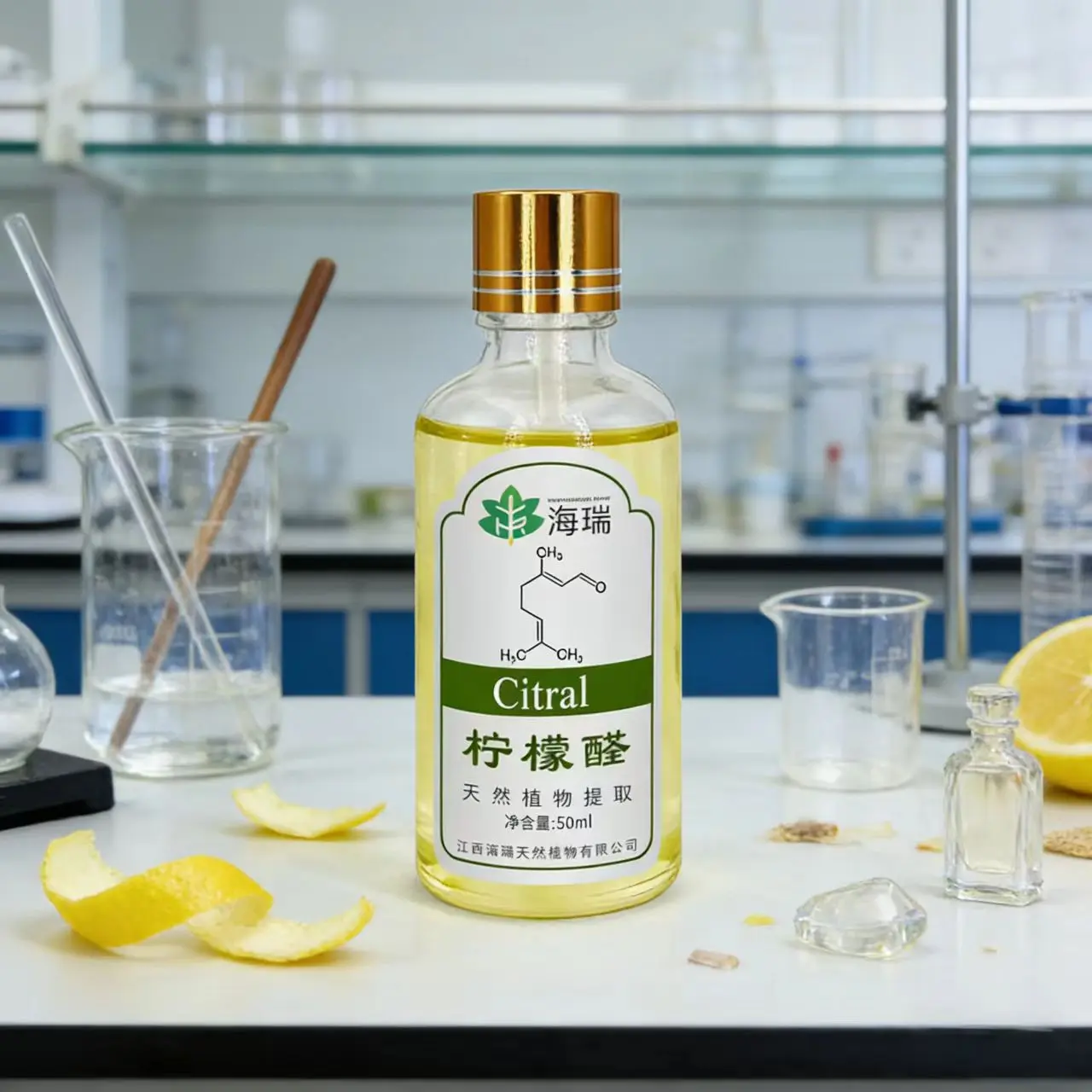
Citral is a terpene compound characterized by a rich lemon aroma, found primarily in the essential oils of lemongrass, lemon verbena, and Litsea cubeba. Its applications span five major sectors—fragrances, food, daily chemical products, pharmaceuticals, and general chemicals—with its core functions centering on imparting fragrance, antimicrobial activity, antioxidant and anti-inflammatory properties, and serving as a key chemical intermediate.
Fresh Fragrance Blending
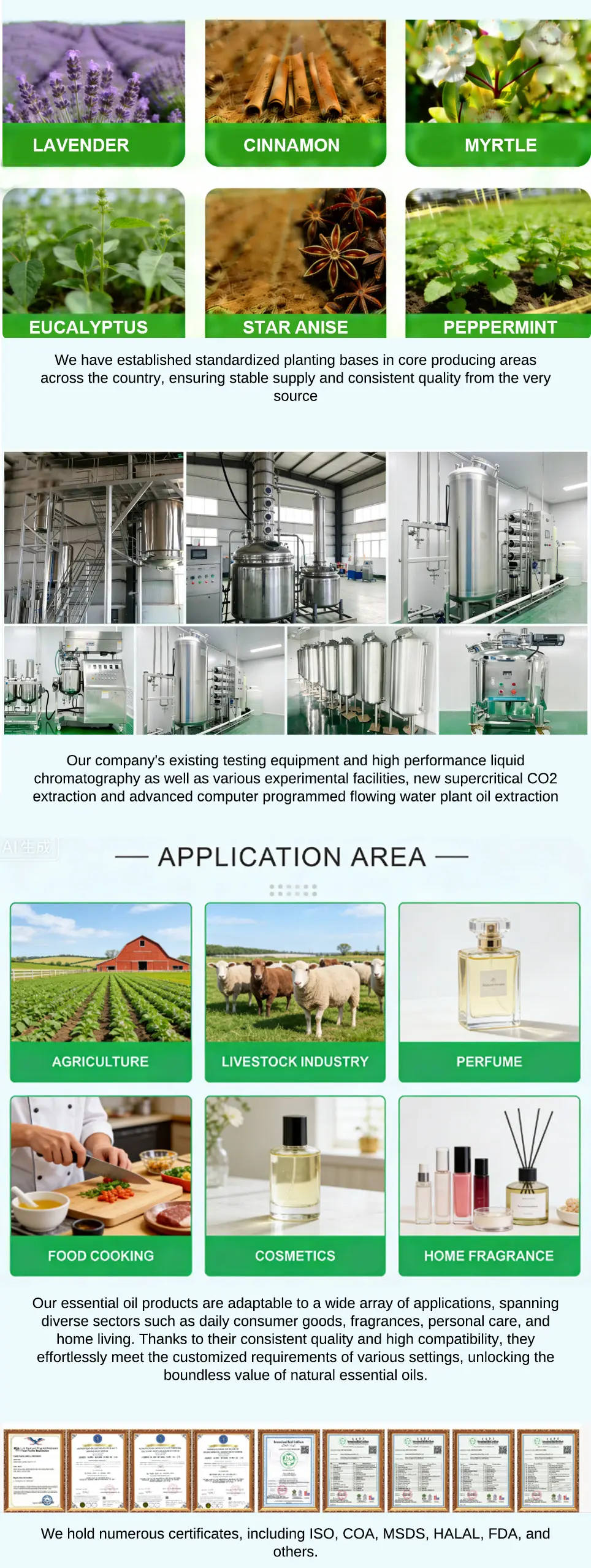
Imparts a refreshing and invigorating lemon scent to perfumes, soaps, shampoos, body washes, floral waters, and air fresheners.
Food Flavoring
Imparts a fresh, rich lemon/citrus flavor to food products; serves as a core ingredient in the formulation of fruit flavorings such as lemon, sweet orange, strawberry, and apple.
High-Grade Synthesis
Used for the synthesis of various high-grade fragrances, such as citronellol, geraniol, nerol, and citronellonitrile.
Q: What is Citral?
Citral is a terpene compound characterized by a rich, distinctive lemon aroma.
Q: What are the primary natural sources of Citral?
It is found primarily in the essential oils of lemongrass, lemon verbena, and Litsea cubeba.
Q: Which industries utilize Citral the most?
Its applications span five major sectors: fragrances, food, daily chemical products, pharmaceuticals, and general chemicals.
Q: How does Citral function in daily chemical products?
It is used to impart a refreshing and invigorating lemon scent to daily essentials such as perfumes, soaps, shampoos, body washes, floral waters, and air fresheners.
Q: What role does Citral play in food flavoring?
Citral serves as a core ingredient to impart a fresh, rich lemon/citrus flavor to food products, and is essential in formulating fruit flavorings like sweet orange, strawberry, apple, and lemon.
Q: What high-grade fragrances can be synthesized from Citral?
Citral is used as a chemical intermediate for the synthesis of various high-grade fragrances, including citronellol, geraniol, nerol, and citronellonitrile.