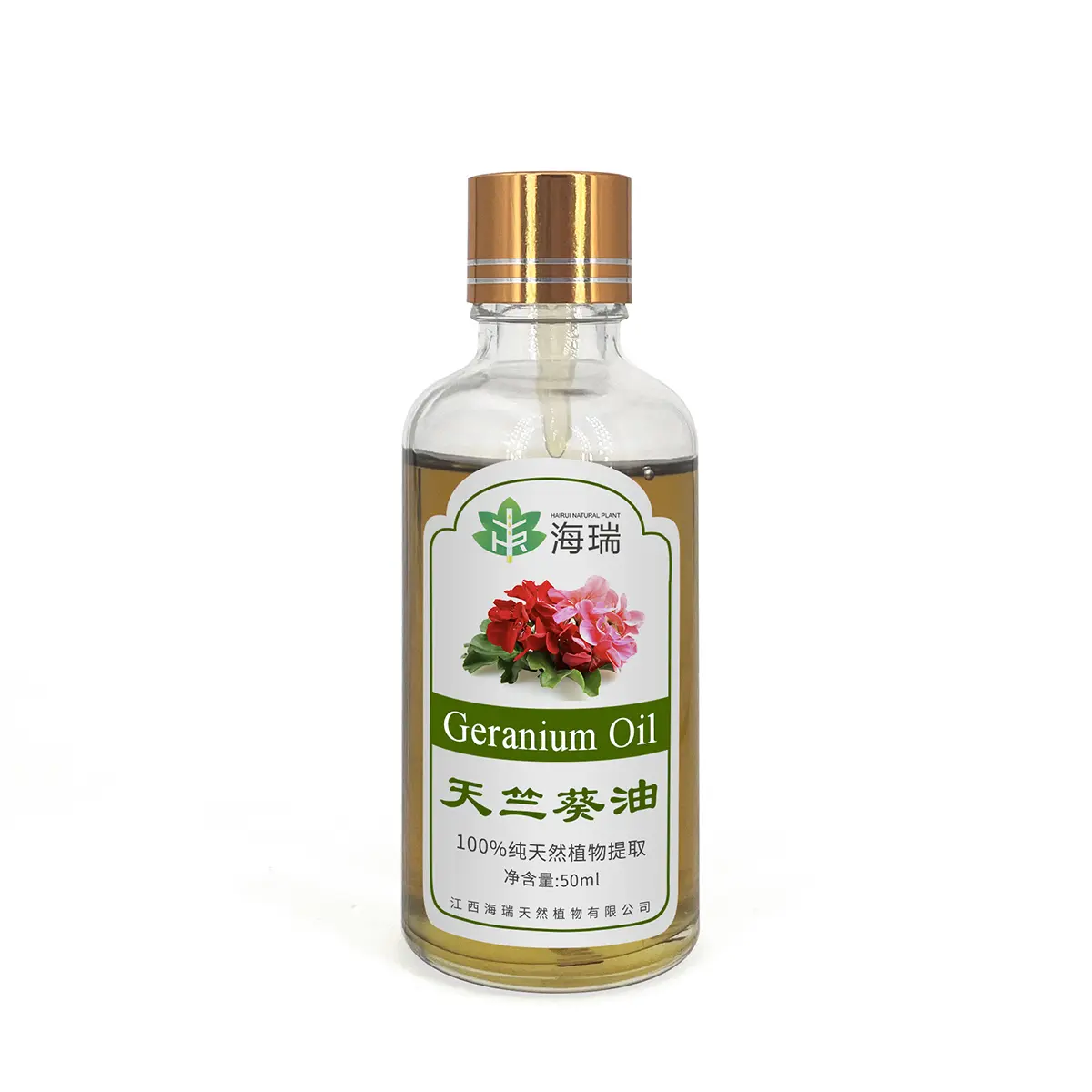
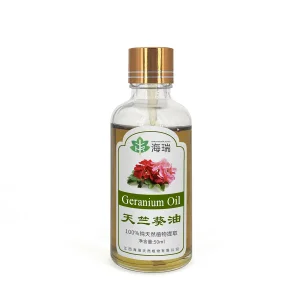
Colorless or light yellow to yellowish brown clear essential oil. It has a sweet aroma like rose and geraniol, as well as a minty flavor, and a bitter taste. It is unstable to strong acids, and geraniol esters and citronellol esters will be partially saponified in alkaline. It is soluble in ethanol, benzyl benzoate and most vegetable oils, and is often milky white in mineral oil and propylene glycol. It is insoluble in glycerin.
Geranium oil has a rose and geraniol-like aroma. It is sweet and slightly clear, and the aroma is stable and long-lasting. Freshly distilled geranium oil sometimes has a mixed smell, which is the aroma of a small amount of sulfide, which disappears after a short storage period.
Geranium oil is distilled from the flowers and leaves of geranium.
Frequently Asked Questions
What are the appearance and aroma characteristics of Geranium essential oil?
Geranium essential oil is a colorless or light yellow to yellowish brown clear oil. It features a sweet, rose-like, and geraniol-like aroma, accompanied by a minty flavor and a bitter taste.
How is Geranium essential oil extracted?
Geranium essential oil is extracted by distilling the flowers and leaves of the geranium plant.
What is the solubility profile of Geranium oil?
It is soluble in ethanol, benzyl benzoate, and most vegetable oils. It appears milky white in mineral oil and propylene glycol, and is completely insoluble in glycerin.
What are the chemical components found in Geranium essential oil?
Its main chemical components include geraniol, citronellol, linalool, isomenthone, menthone, geranyl formate, citronellal, neral, geranial, eugenol, and isopentanol.
What are the main psychological and physiological benefits of Geranium oil?
Psychologically, it helps calm anxiety, relieve stress, and restore balance. Physiologically, it helps clear heat, detoxify, remove dampness, promote blood circulation, and alleviate headaches and cold symptoms.