1 / 1

Fennel oil has a warming nature, warming the kidneys and liver, promoting qi circulation and relieving pain. It is commonly used to treat cold-related pain symptoms, such as abdominal pain caused by cold hernia, testicular prolapse, and lower abdominal cold pain. Its volatile oil components promote blood circulation and relieve pain caused by cold pathogens.
Fennel oil regulates gastrointestinal function, relieving symptoms such as flatulence and belching. Its components, such as anethole, stimulate the secretion of digestive juices, aid digestion, and improve appetite.
Fennel oil has inhibitory effects on various bacteria (such as Staphylococcus aureus and Escherichia coli), can reduce gastrointestinal inflammation, and assist in the treatment of gastritis and enteritis.
The volatile oils in fennel oil stimulate gastrointestinal motility, accelerate food digestion and absorption, and relieve indigestion symptoms such as bloating and constipation.
Anti-inflammatory and Analgesic: Animal studies have shown that it can inhibit inflammation and relieve pain.
Skin Care: External use can moisturize the skin and relieve dryness.
Endocrine Regulation: It has a certain regulating effect on menopausal hot flashes and thyroid function.
The main active chemical components of this oil are anethole (accounting for 50%-60%), fenchone (accounting for 18%-20%), and fennel.
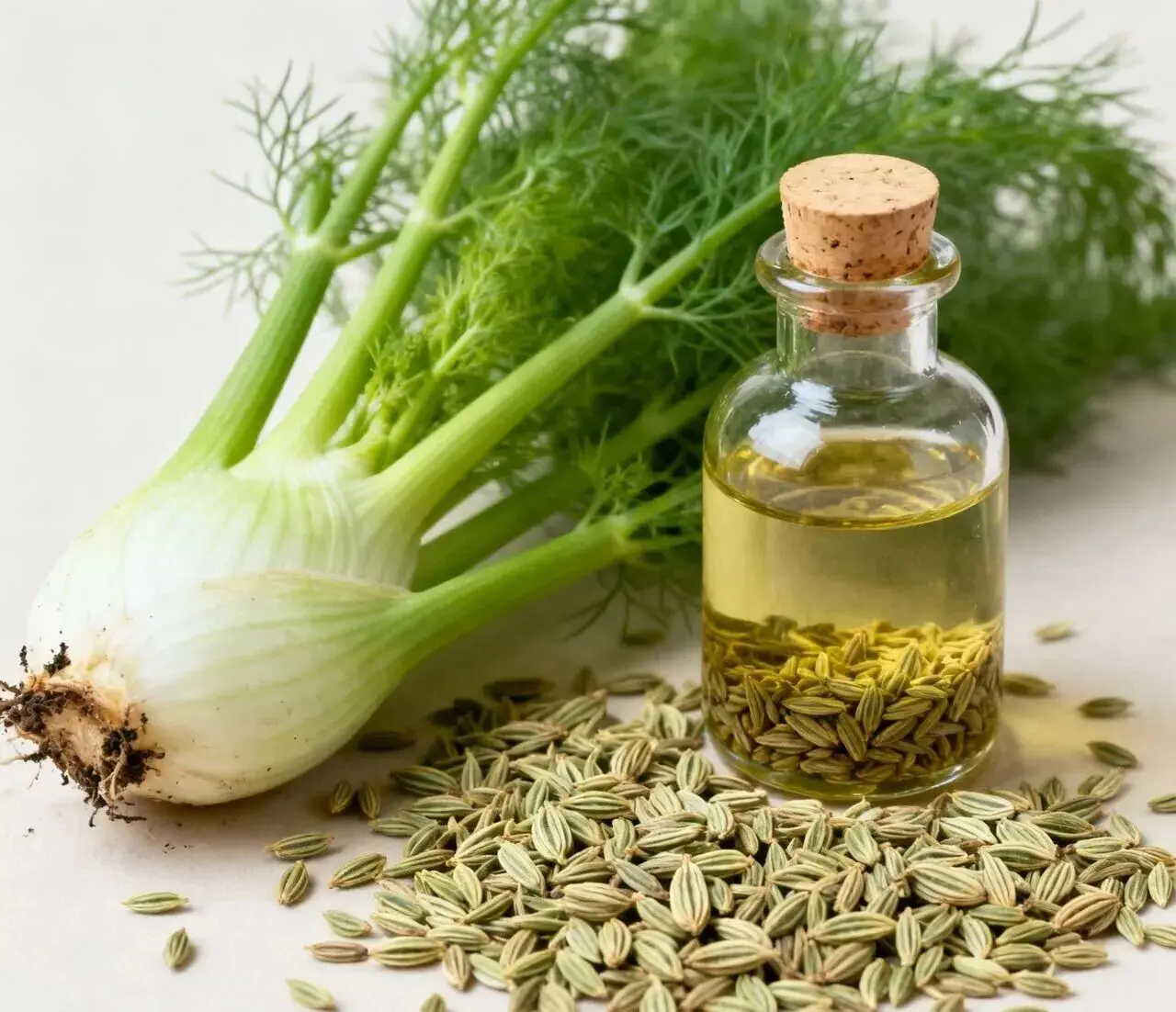
It is a volatile oil extracted from the dried mature fruit of the Apiaceae plant, produced using advanced steam distillation or dual-frequency ultrasonic extraction methods.
It is highly versatile and widely used in food seasoning, pharmaceutical raw materials, daily chemical flavors, and tobacco products.
It stimulates gastrointestinal motility and the secretion of digestive juices. This effectively regulates gastrointestinal function, improves appetite, and relieves indigestion, flatulence, bloating, and constipation.
Yes, it has proven inhibitory effects against various bacteria, including Staphylococcus aureus and Escherichia coli, which helps reduce gastrointestinal inflammation like gastritis and enteritis.
It appears as a colorless to pale yellow, clear liquid or crystalline solid with a characteristic cumin aroma. It is freely soluble in organic solvents such as ethanol and ether, but is completely insoluble in water.