1 / 1

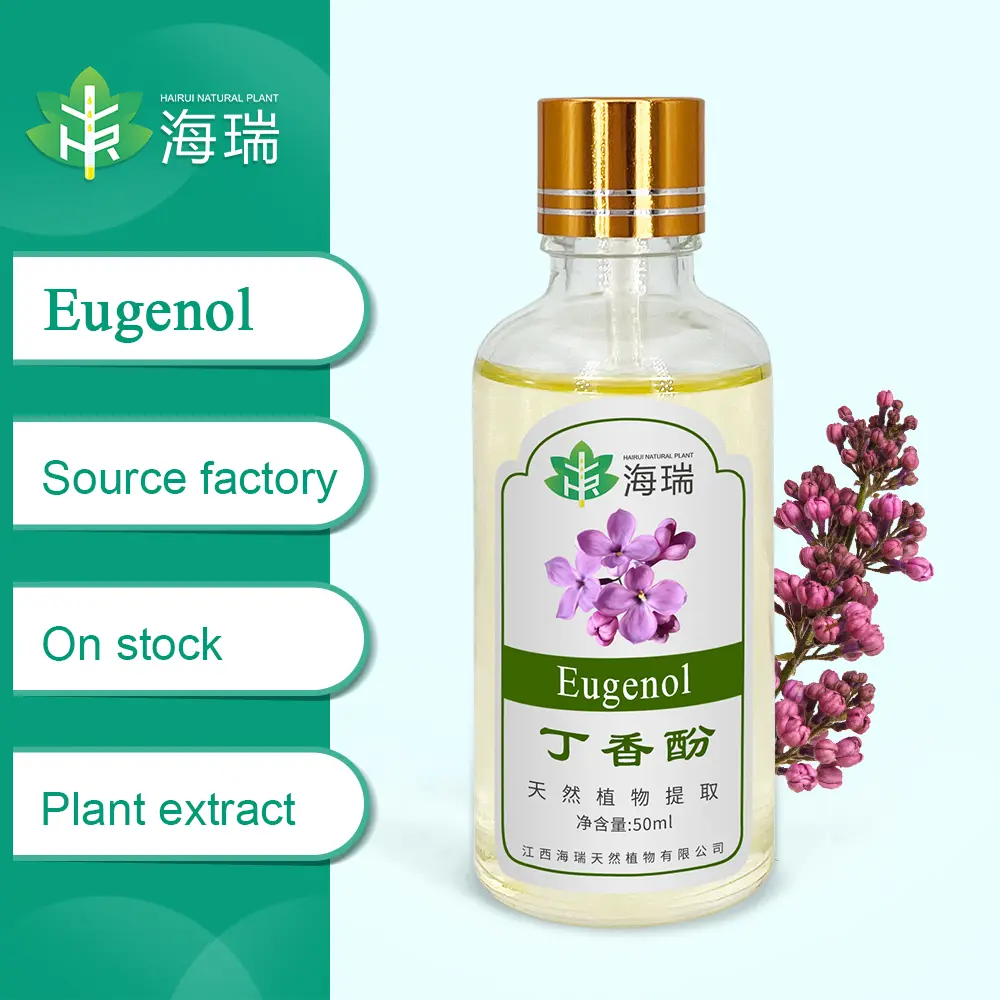
Do you know the eugenol?
Eugenol has a wide range of applications, encompassing industries such as pharmaceuticals, food, chemicals, and daily chemicals.
The applications are as below:
Due to its antibacterial and disinfectant properties, it is often used as a dental root canal disinfectant and for topical oral sterilization. It can also be used as an auxiliary ingredient in topical preparations, leveraging its transdermal absorption-enhancing properties to enhance drug efficacy.
Its unique chemical structure enhances the permeability of the skin's stratum corneum, helping drugs or active ingredients to be absorbed more easily through the skin. It is often added to topical ointments, patches, and other preparations to improve efficacy.
Due to its distinctive clove aroma, it is used as a flavoring agent in flavorings and can be added to foods such as pastries, beverages, and candies, or used to enhance the flavor of alcoholic beverages and condiments.
It is used in the formulation of fragrances for daily chemical products such as perfumes, soaps, shower gels, and air fresheners, adding fragrance to these products. Furthermore, due to its mosquito repellent properties, it can be used in the preparation of insect repellent products such as mosquito repellent liquids and patches.
As an important chemical intermediate, it can be used to synthesize other chemicals such as vanillin and isoeugenol. These derivatives are widely used in the fragrance and pharmaceutical industries.
Some studies have shown that it has certain insect repellent and antibacterial effects, and can be used to develop green pesticides or feed additives.
Eugenol is widely used in multiple industries including pharmaceuticals (for dental sterilization and transdermal enhancement), food (as a flavoring agent), daily chemicals (for perfumes and mosquito repellents), the chemical industry (as an intermediate), and agriculture.
Thanks to its antibacterial and disinfectant properties, Eugenol serves as a dental root canal disinfectant and a topical oral sterilizer. It also acts as a transdermal absorption enhancer, improving the absorption and efficacy of drugs through the skin in ointments and patches.
Yes. Because of its unique clove aroma, it is commonly used as a flavoring agent. It can be added to foods such as pastries, candies, beverages, condiments, and alcoholic beverages to enhance their taste and scent.
Yes, Eugenol possesses natural insect and mosquito-repellent qualities. It is frequently formulated into daily chemical products such as mosquito repellent liquids and patches, alongside its use as a fragrance in perfumes, soaps, and shower gels.
In the chemical industry, it serves as a key intermediate to synthesize vanillin and isoeugenol. In agriculture, its natural antibacterial and insect-repellent properties make it useful for developing eco-friendly green pesticides or livestock feed additives.