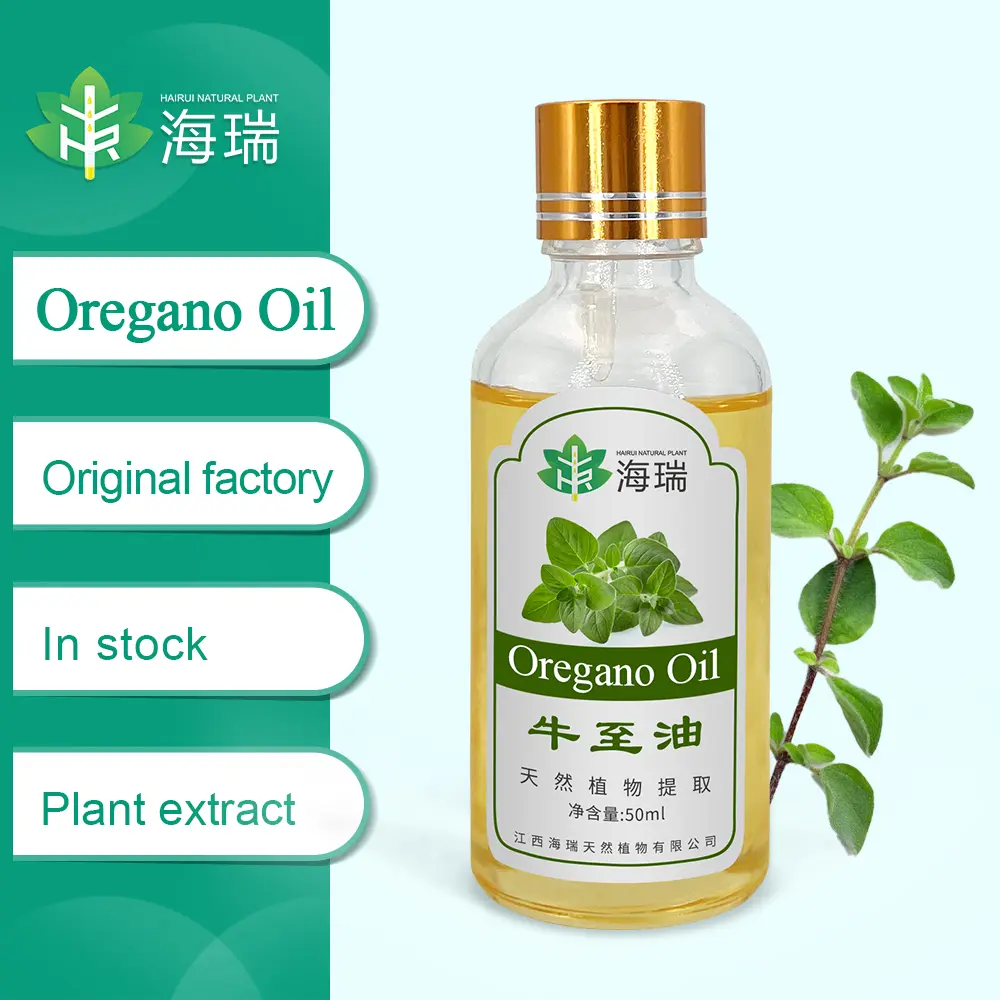

Discount Oregano Oil Plant Extract Antibacterial And Antioxidant Food Flavoring Exporter, Exporters

Product name: oregano oil
Apperance: Light yellow to dark brownish red liquid
Odour: The character aroma of oregano
Ingredient:

Oregano

CAS NO.: 8007-11-2
Sample: Available
Certification: MSDS/COA/FDA/ISO9001/HALAL

Product Description

Introduction Of Oregano Oil

Oregano Oil: A Multifaceted Natural Essential Oil

Introduction

Oregano oil is a volatile essential oil extracted from the leaves and flowers of the Lamiaceae plant, Origanum vulgare. It is pale yellow to light brown in color and has a rich herbal aroma. Its core active ingredients are carvacrol and thymol, which account for over 70% of the oil. Due to its natural antibacterial and antioxidant properties, it is widely used in medicine, animal husbandry, food, and daily chemical applications, and is recognized as a "natural preservative" and "green additive."

Instructions for Use

Livestock Applications
  • Feed Additive: Mix 0.05%-0.2% into livestock and poultry feed (e.g., broilers, pigs, and laying hens), either directly or mixed with a carrier, to improve intestinal health.
  • Environmental Disinfection: Dilute 100-200 times and spray in livestock and poultry pens to reduce pathogen concentrations and odor.
Daily Health Care
  • Skin Care: Dilute with a carrier oil (such as olive oil or jojoba oil) in a 1:10 ratio and apply to the skin to relieve minor inflammation or insect bites.
  • Air Purification: Add 2-3 drops to an aromatherapy diffuser to improve indoor air quality and inhibit harmful airborne microorganisms.
Food Processing
  • Natural Preservative: Used to preserve and extend the shelf life of foods such as meat and sauces (subject to compliance with food additive standards).

Benefits

1. Powerful Antibacterial: Inhibits a variety of pathogens, including Escherichia coli, Salmonella, and Staphylococcus aureus, reducing the risk of intestinal infections and making it particularly suitable for antibiotic-free farming.
2. Improves Digestion: Stimulates the appetite of livestock and poultry, promotes intestinal motility, improves feed conversion, and enhances animal growth performance (e.g., increasing daily weight gain in broilers and egg production in laying hens).
3. Antioxidant: Reduces cellular oxidative damage. In livestock farming, it can delay oxidative spoilage and extend the shelf life of meat. Topical application also helps maintain skin health.
4. Insect Repellent and Environmental Conditioning: The scent repels mosquitoes and flies, reduces the risk of parasite transmission, and purifies the farming environment.

Contraindications & Warnings

1. Concentration Limit: Pure oregano oil is highly irritating and should not come into direct contact with skin or mucous membranes (such as the eyes and nose). Dilute it before use to avoid burns.
2. Special Populations: Use with caution with pregnant women, infants, and those with allergies, as it may cause allergic reactions or discomfort.
3. Avoid Internal Use: Internal use should only be performed under professional guidance. Excessive use may irritate the gastrointestinal tract and cause symptoms such as nausea and vomiting.
4. Storage: Store tightly sealed in a cool, dark place, away from fire and children to prevent evaporation and deterioration.
Oregano oil's natural and effective properties make it an ideal alternative to chemical additives. However, strict control of dosage and method is required to maximize its effectiveness.

Frequently Asked Questions (FAQ)

Q: What are the primary active ingredients in Oregano Oil?

The main active ingredients are carvacrol and thymol, which together constitute more than 70% of the oil and provide its powerful antibacterial and antioxidant properties.

Q: Can Oregano Oil be applied directly to the skin?

No, pure oregano oil is highly concentrated and irritating. It must be diluted with a carrier oil, such as olive or jojoba oil, at a 1:10 ratio before applying to the skin.

Q: How is Oregano Oil utilized in livestock feed?

It is typically mixed directly or via a carrier into livestock and poultry feed at a concentration of 0.05% to 0.2% to support gut health and optimize growth performance.

Q: Why is Oregano Oil considered a good alternative to chemical preservatives?

Its rich natural antibacterial qualities effectively inhibit common pathogens like E. coli and Salmonella, which helps delay spoilage and extend shelf life naturally.

Q: What is the correct way to store Oregano Oil?

It should be kept in a tightly sealed container and stored in a cool, dark location away from heat sources and out of reach of children to maintain its stability.
Related Products