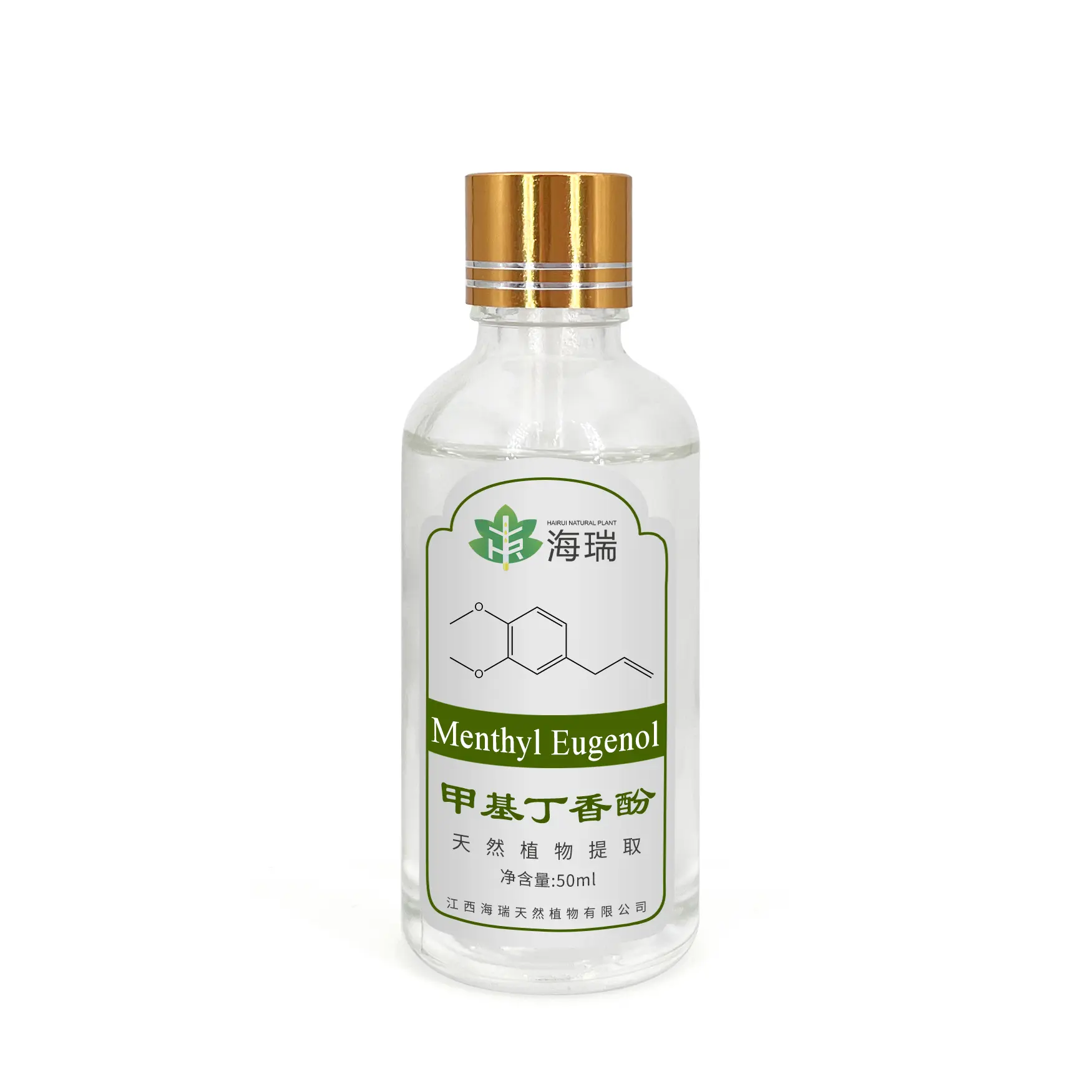

It can create a gentle undertone in floral, herbal, or oriental fragrances. It can be used in small quantities in fragrances such as rose, carnation, ylang-ylang, lilac, gardenia, hyacinth, white orchid, tuberose, clary sage, lavender, bay rum, and men's cologne. It can also be used in food flavors, primarily as a modifier for spicy notes, providing a ginger-like aroma, and in tobacco flavors.
What are the primary applications of Methyl Eugenol?
Methyl Eugenol is primarily used in two main fields: agriculture (as an insect repellent and attractant for pest control) and in the flavoring and daily chemicals industry (providing aromatic components).
How is Methyl Eugenol utilized in agricultural pest management?
It acts as a pheromone analog that targets specific pests, such as the citrus fruit fly, by disrupting their behavior. This allows for precise pest management, which helps reduce the overall use of chemical pesticides and minimizes environmental and crop pollution.
What does Methyl Eugenol smell like?
Methyl Eugenol has a mild, long-lasting clove-like aroma. When used in food flavors, it serves as a modifier for spicy notes, introducing a ginger-like aroma.
In what daily chemical products can Methyl Eugenol be found?
It is commonly used as a raw material for fragrances in daily chemical products like soaps and perfumes. It is suitable for building gentle undertones in floral, herbal, or oriental fragrances, including lavender, rose, carnation, and men's colognes.
Is Methyl Eugenol approved for use in food products?
Yes, Methyl Eugenol is legally used as a food additive (such as in flavorings for cakes, beverages, and tobacco) provided it complies with all relevant safety standards.