1 / 1

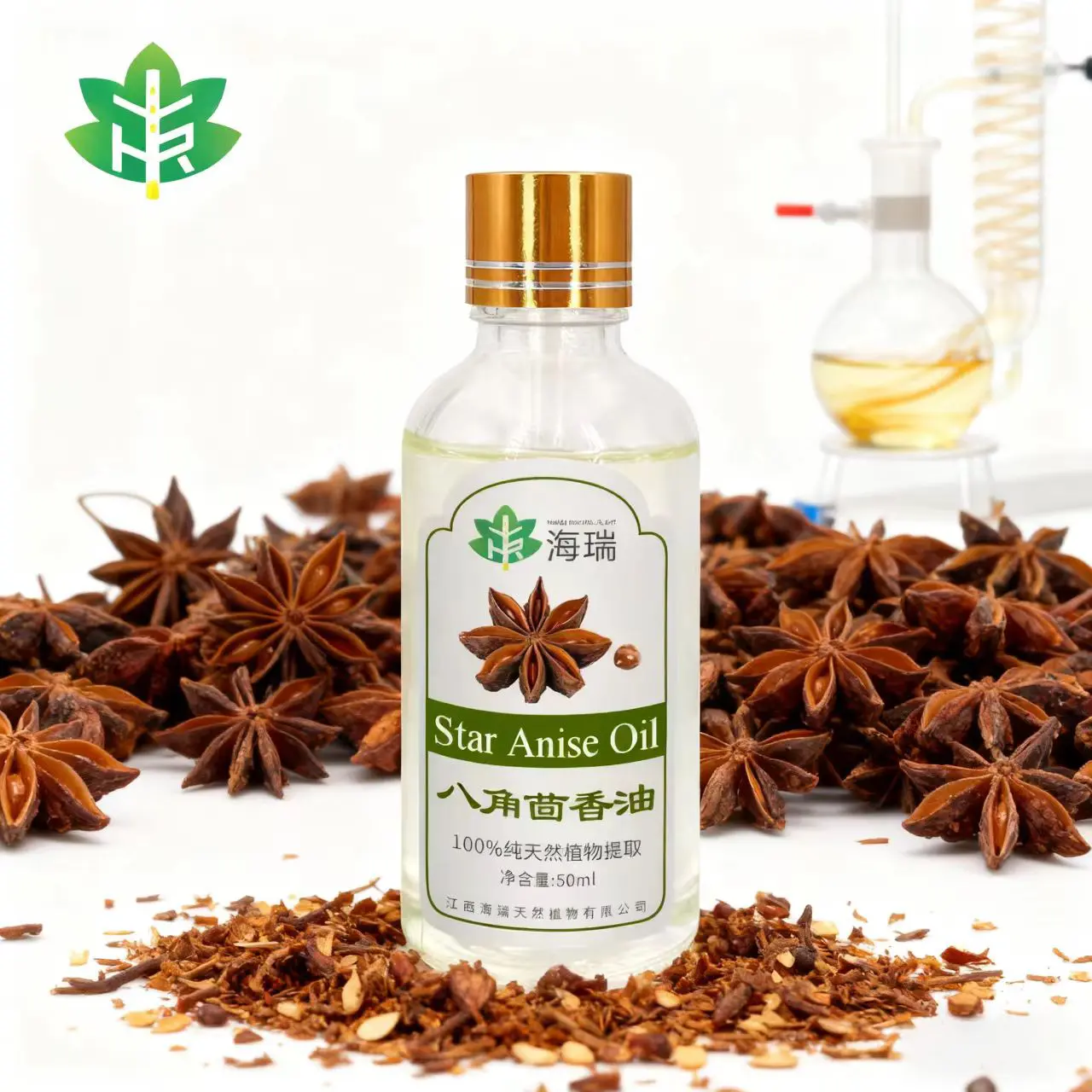
Star anise oil is a natural volatile oil extracted from star anise fruit. It possesses antibacterial, anti-inflammatory, digestive-promoting, pain-relieving, antioxidant, and anthelmintic properties, and is widely used in the food, pharmaceutical, and traditional medicine fields.
Anethole and flavonoids in star anise oil have broad-spectrum antibacterial activity, inhibiting the growth of various bacteria (such as Escherichia coli and Staphylococcus aureus) and fungi. Studies show that its antibacterial mechanism may be related to disrupting the cell membrane structure of microorganisms, and it is often used as an adjunct treatment for intestinal infections or skin inflammation.
This volatile oil can help relieve bloating and indigestion by stimulating gastric juice secretion and enhancing intestinal peristalsis. Anethole and other components can relax gastrointestinal smooth muscles, reducing spasms and pain, making it suitable for small doses after meals or use in combination with other stomach-strengthening herbs.
In traditional medicine, star anise oil is used to relieve joint pain, toothache, or muscle aches. Its analgesic effect may be related to the inhibition of the release of inflammatory factors (such as prostaglandins). It needs to be diluted for topical application to avoid skin irritation.
Contains polyphenols that can scavenge free radicals and delay oxidative damage, playing a certain auxiliary role in the prevention of chronic diseases (such as cardiovascular diseases). Animal experiments have shown that its antioxidant activity can protect liver cells from toxin damage.
Has a natural repellent effect on mosquitoes, mites, etc., and is often used as a natural insect repellent ingredient. Folk uses include dilution and spraying on clothing or in the environment, but concentration control is necessary.
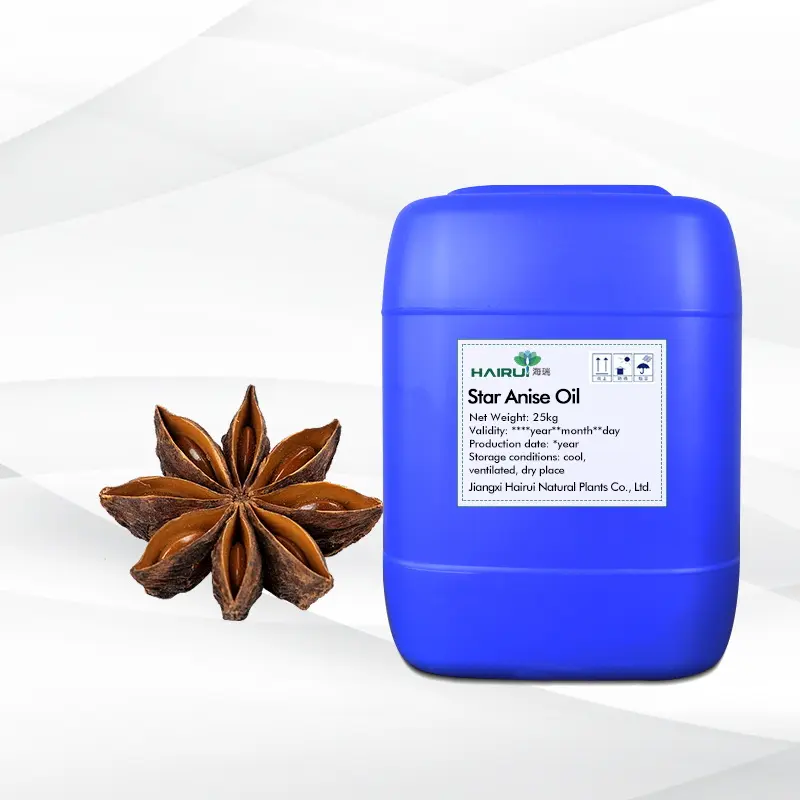
Star anise oil is a natural volatile oil extracted from star anise fruit. It is widely used in food, pharmaceuticals, and traditional medicine due to its therapeutic properties.
It stimulates gastric juice secretion and enhances intestinal peristalsis. The components, such as anethole, help relax gastrointestinal smooth muscles, reducing spasms, bloating, and indigestion.
Yes, it contains anethole and flavonoids which exhibit broad-spectrum antibacterial activity, helping to inhibit various bacteria like Escherichia coli and Staphylococcus aureus, as well as certain fungi.
While it is used in traditional medicine to relieve joint, muscle, or tooth pain, it must be properly diluted before topical application to avoid skin irritation.
It acts as a natural repellent against mosquitoes and mites. It can be diluted and sprayed on clothing or in the environment, making sure to control the concentration carefully.
It contains polyphenols that scavenge free radicals and delay oxidative damage. Research shows it can assist in preventing chronic conditions and protecting liver cells from toxin damage.