1 / 1


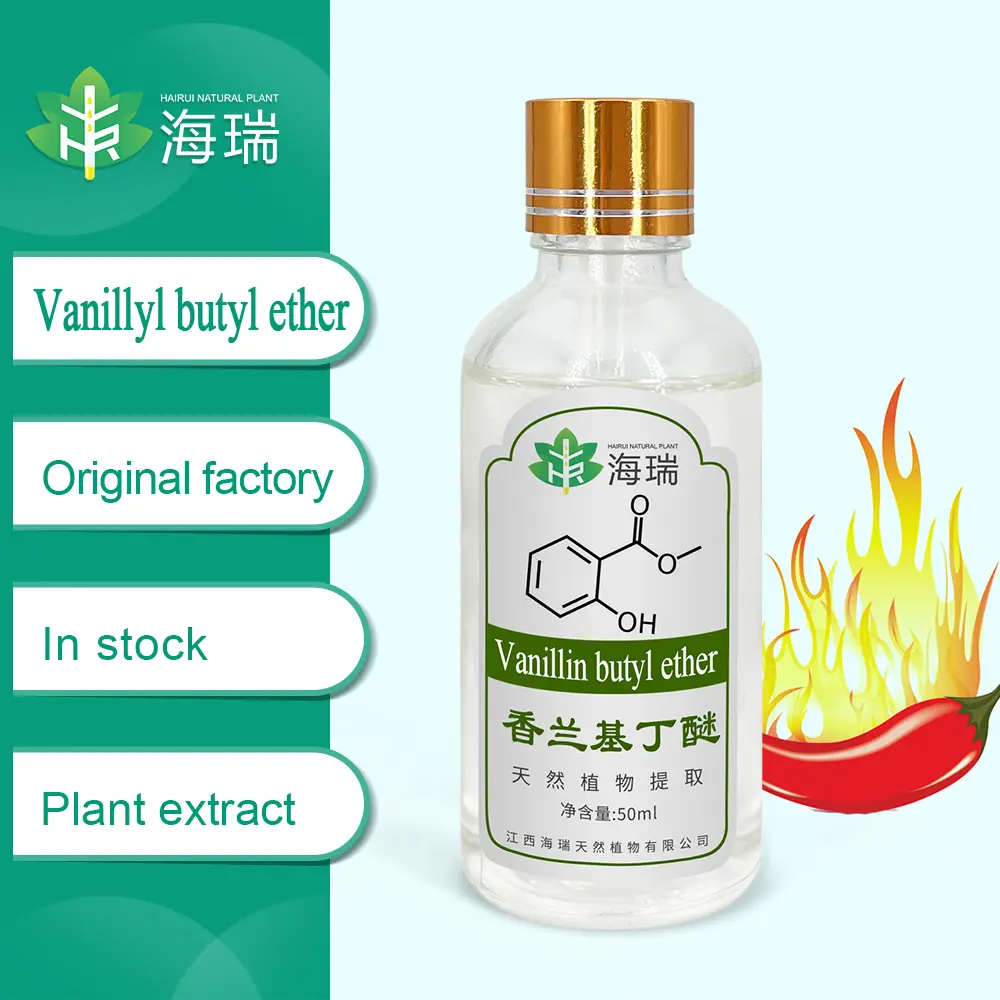
Vanillyl Butyl Ether, chemically known as 2-methoxy-4-(butoxymethyl)phenol, is also known as vanillyl alcohol butyl ether and vanillyl butyl ether. It is an organic compound derived from vanillin. It appears as a colorless to pale yellow viscous liquid with a faint vanilla aroma, a unique odor that makes it particularly attractive in fragrance applications.
From a chemical perspective, its molecular formula is C₁₂H₁₈O₃, with a molecular weight of 210.27. This structure gives it unique physical and chemical properties, such as a boiling point of 241°C (lit.), a density of 1.057 g/mL at 25°C (lit.), a flash point >230°F, and a refractive index n20/D of 1.516 (lit.).
Vanillyl Butyl Ether has attracted considerable attention primarily due to its unique thermal effect. When applied to the skin, it rapidly activates vanilloid receptors (also known as capsaicin receptors, a channel protein complex). Upon receptor activation, calcium channels open, depolarizing the membranes of primary sensory neuron terminals.
This produces a rapid, intense heat sensation within approximately two minutes, which can last for about two hours. It's important to note that this sensation of heat is a thermal effect perceived through the triggering of neurotransmitters; the actual skin temperature does not significantly increase.
Vanillyl Butyl Ether is widely used in this field. Due to its mild and long-lasting warming properties, it is often added to slimming and weight loss creams to help accelerate fat metabolism and promote subcutaneous fat burning. Adding it to massage oils and creams creates a warming sensation that promotes blood circulation and relieves muscle fatigue. It is also used in thermal masks, shampoos, shower gels, and body lotions for moisturizing, fragrance, and antioxidant benefits.
In the food industry, Vanillyl Butyl Ether is primarily used as a flavor enhancer. It adds a unique, rich vanilla flavor to ice cream, candy, and baked goods, improving overall product taste and quality. Additionally, it offers a certain preservative effect that helps extend the shelf life of food products.
Used as a topical irritant for treating frostbite, muscle pain, and joint discomfort, it promotes local blood circulation and relieves soreness. It is commonly formulated into plasters, sprays, arthritis care products, uterine warming patches, and foot bath powders. It also acts as a pharmaceutical excipient to improve drug stability and taste, providing mild analgesic and anti-inflammatory properties.
As a key raw material, it enhances the aroma profile and quality of tobacco products. In the flavor and fragrance industry, it blends with other ingredients to produce unique scents for perfumes, aromatherapy, and air fresheners, establishing a comfortable and pleasant fragrance environment.
Despite its numerous benefits and widespread applications, vanillyl butyl ether should be used with caution. Pregnant women and children should use products containing vanillyl butyl ether with caution, as their skin is more sensitive and may react adversely to the ingredient. Those with sensitive skin should also avoid using products to avoid allergic reactions.
Before using any product containing vanillyl butyl ether, it is best to test it on a small area of skin to observe for any allergic or irritating reactions. If symptoms such as redness, swelling, itching, or stinging occur, discontinue use immediately and seek medical attention.
Vanillyl Butyl Ether is primary used for its warming agent properties, providing a long-lasting and mild heat sensation when applied to the skin, as well as acting as a vanilla flavor enhancer in foods and tobacco.
No, it does not physically increase the skin's temperature significantly. The warming sensation is a neurological response triggered by the activation of vanilloid receptors in the skin.
It is commonly formulated into slimming creams, thermal face masks, massage oils, body lotions, shampoos, and bath products to promote circulation and relax muscles.
Yes. It is used as a food flavor enhancer to introduce a deep vanilla aroma in items like candy, ice cream, and baked goods, and it acts as a mild preservative.
It can cause skin irritation or allergic reactions in sensitive individuals. Pregnant women, children, and people with highly sensitive skin should use products containing this ingredient with caution, and a spot test is highly recommended prior to full application.