1 / 1

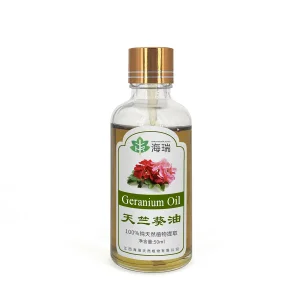
Geraniol is widely used in floral daily flavors, can be used in fruity flavors such as apple, strawberry, cinnamon, ginger and other flavors, and can also be made into ester flavors. As the main agent of rose flavors, geraniol is an indispensable flavoring raw material in various floral flavors. It can also be regarded as a sweetener and can be used to prepare food, soap, and daily cosmetic flavors.
Products made from natural essential oils contain more than 90% geraniol when used in food and daily cosmetic flavors, and more than 80% geraniol when used in soap flavors.
Industrial products geraniol and nerol are raw materials for making vanillin, citral, hydroxyvanillin, ionone and vitamin A. Various esters synthesized with geraniol are also good flavors.
In medical applications, it is used for antibacterial and anthelmintic purposes; it has shown excellent clinical efficacy in the treatment of chronic bronchitis. It not only improves lung ventilation function and reduces airway resistance, but is also beneficial to improving the body's immune function, offering the advantages of fast onset and minimal side effects.
Geraniol exhibits a certain level of toxicity depending on the dosage and administration method:
Despite these parameters, it exhibits a positive therapeutic profile in the clinical treatment of chronic bronchitis under proper medical application.
Geraniol is widely utilized in daily floral fragrances, serving as the main agent for rose flavors. It is also used to formulate fruity flavor profiles like apple, strawberry, ginger, and cinnamon, and is an essential ingredient in soaps, food preparation, and daily cosmetics.
Geraniol and nerol serve as crucial industrial starting materials for the production of vanillin, citral, hydroxyvanillin, ionone, and vitamin A. Various esters synthesized from geraniol are also widely used as high-quality flavors.
Clinically, Geraniol has demonstrated positive results in treating chronic bronchitis. It functions by improving lung ventilation, decreasing airway resistance, and boosting the body's immune defense system. It is characterized by a rapid onset and minimal side effects.
Geraniol exhibits strong antibacterial and antifungal actions. For instance, the minimum inhibitory concentration (MIC) required to inhibit Trichophyton mentagrophytes and Microsporum audouinii is documented at 0.39mg/ml.
In rats, small oral doses of Geraniol can slow the passage of chyme by inhibiting gastrointestinal motility, though it has little impact on the large intestine. It may also trigger a mild diuretic effect in small amounts, while doses approaching the lethal limit display a laxative effect.
Geraniol possesses a recognized toxicity profile. Laboratory benchmarks indicate that the oral LD50 in rats is 4.8g/kg, and the threshold for intravenous injection in rabbits is 50mg/kg.