In the modern botanical and biological ingredients landscape, sourcing high-caliber single essential oils requires navigating complex raw material chains, fluctuating agricultural conditions, and technical adulteration threats. B2B procurement managers across pharmaceuticals, premium cosmetics, food manufacturing, and clean agriculture cannot afford variability. Standard analytical testing such as Gas Chromatography-Mass Spectrometry (GC-MS) combined with Chiral Chromatography is vital to establish true botanical identities.
The global supply landscape faces significant challenges. Unstandardized farming methodologies, premature harvests, and contamination by chemical pesticides can alter the delicate terpene, aldehyde, and ester profiles of critical mono-botanicals like oregano, peppermint, and eucalyptus oil. Understanding these metrics represents the initial step in risk-mitigation.
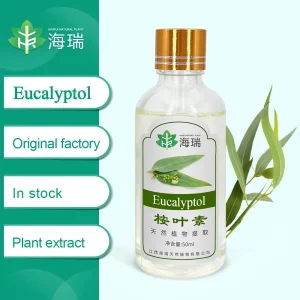
Unlike synthetic compounds, single essential oils are multi-constituent natural systems. While a compound like eucalyptol boasts a purity rating of 99%, the minor natural constituents provide synergistic biological activities that synthetic versions cannot reproduce.
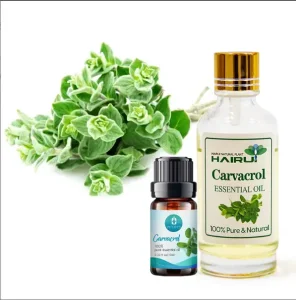
Our production methods leverage distinct parameters for steam distillation, fractional distillation, and cold-pressing to keep active matrices intact. For instance, the isolation of pure Carvacrol requires accurate thermal regulation during distillation to prevent isomerization while securing optimal yields.
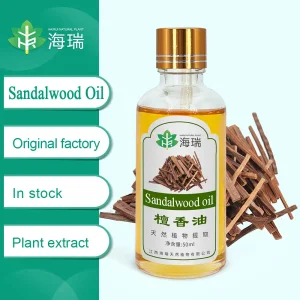
Derived via steam distillation or cold compression methods, these products form the raw inputs for high-end cosmetic, personal care, and pharmaceutical integrations.
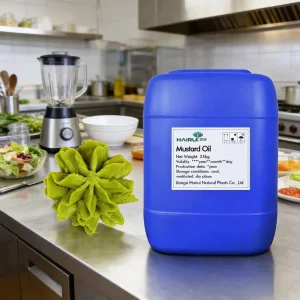
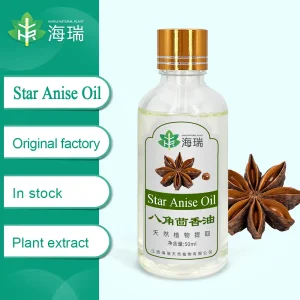
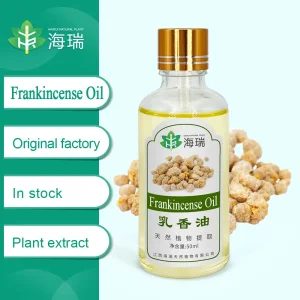
Our portfolio features essential products including Camellia Oil, Eucalyptus Oil, Oregano Oil, and Peppermint Oil. We supervise every phase from extraction to final packaging to secure high quality standards.
Also referred to as medium or carrier oils, these lipids are typically extracted using cold compression technology.
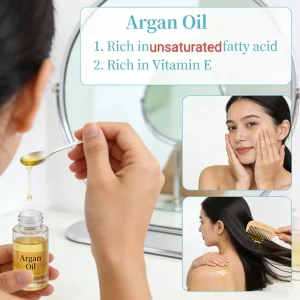
Because single essential oils cannot be safely applied directly to the skin, diluting them in premium carrier oils is necessary. Our botanical base oils, such as pure castor oil and argan oil, retain their organic therapeutic qualities to provide functional benefits.
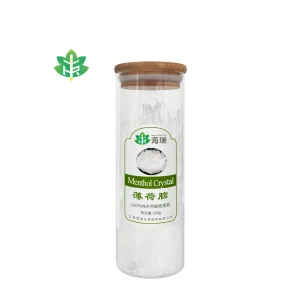
Obtained through separation methods, crystallization, and precipitation from essential oil bases.
Our production is backed by our dedicated raw material cultivation base, spanning over 5,000 acres. Controlling the supply chain from seed selection to harvest ensures reliable product quality and consistency.
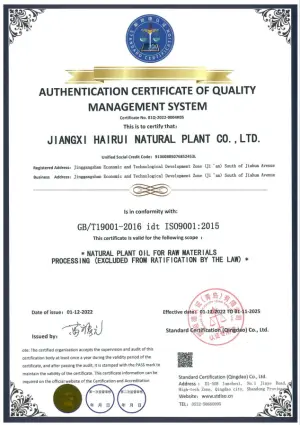
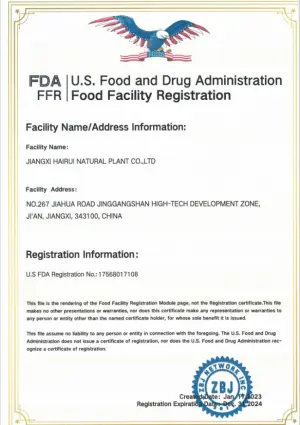
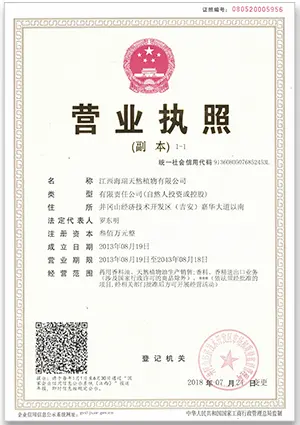
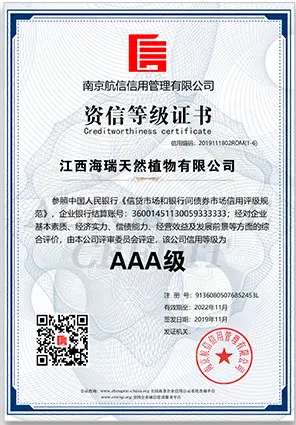
Founded in 2006, Jiangxi Hairui Natural Plant Co., Ltd. is a specialized enterprise focused on the manufacturing, extraction, and global distribution of premium natural plant essential oils. We are located in the Jinggang Mountain High-Tech Development Zone, Ji'an, Jiangxi Province.
Ji'an is recognized as a center for spice production. The region provides access to diverse botanical resources. With a total capital investment of RMB 50 million, our facility spans 13,000 square meters. The plant is equipped with testing and production technologies, enabling an annual capacity of 2,000 tons of natural essential oils.


Natural, clean, and batch-consistent plant extracts. Every shipment is accompanied by a detailed Certificate of Analysis (COA) and safety documentation.

Continuous investments in quality assurance systems, chromatographic analysis (HPLC, GC-MS), and green chemistry processes.

Our 9-step quality control protocol tracks the process from field cultivation to final delivery. This helps ensure compliance with international trade requirements.
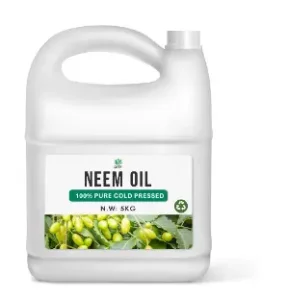
Chemical crop protection programs face increasing regulatory restrictions due to pest resistance issues and environmental impact concerns. Standard botanical isolates, such as Neem Oil and orange essential oil, serve as active components in biopesticides and biofungicides.
For example, D-limonene extracted from sweet orange oil functions as an eco-friendly pesticide. It disrupts the wax protective layers of target insects, leading to dehydration. The compound can be integrated into IPM (Integrated Pest Management) systems without leaving chemical residues on food crops.
The cosmetics industry relies on botanical oils to support skin barrier function. Utilizing cold-pressed carrier oils rich in essential fatty acids is standard practice for modern cosmetic formulations.
Argan Oil, rich in tocopherols (Vitamin E) and oleic/linoleic acids, provides skin-conditioning benefits and supports natural skin repair. This makes it a common ingredient in moisturizers and hair repair serums.
Global livestock production continues to transition away from sub-therapeutic antibiotic growth promoters (AGPs). Phytogenic feed additives (PFAs) containing carvacrol, cinnamaldehyde, and thymol are increasingly used to support animal gut health.
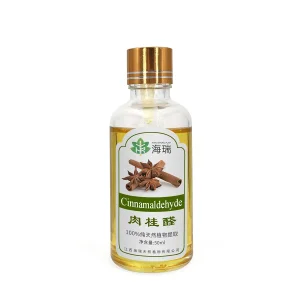
Our 99% Cinnamaldehyde feed additive supports gut flora balance, stimulates digestive enzyme secretion, and helps maintain intestinal integrity in poultry and swine.
Aromatherapy relies on volatile organic compounds interacting with the human olfactory system to influence emotional and physiological states.
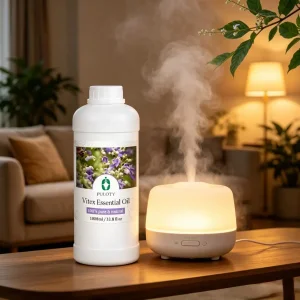
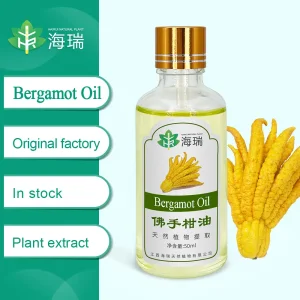
Terpenes such as linalool and linalyl acetate from lavender or bergamot interact with olfactory pathways connected to the limbic system, supporting relaxation. Our steam-distilled single oils, such as Benzoin Essential Oil, are processed to retain these volatile aromatic profiles for diffusion applications.
The plant extract sector is transitioning toward clean label requirements and improved energy efficiency. We are adjusting our development path to incorporate greener extraction technologies to reduce carbon footprints while maintaining active ingredient yields.
Subcritical and Supercritical Fluid Extraction (SFE-CO2): While traditional steam distillation is reliable, it can degrade certain heat-sensitive botanical molecules. Supercritical CO2 extraction processes operate at lower temperatures, preserving volatile structures and enabling solvent-free extraction.
Traceability and Quality Control: Modern supply chains demand verification from field to container. We are integrating batch tracking systems that link GC-MS validation data to QR codes on each shipment, providing transparency for global cosmetics and pharmaceutical buyers.