Select high-purity natural extracts and carrier oils optimized for professional B2B industrial compounding and pharmaceutical applications.
Understanding the synthesis pathways, quality grade standardizations, and industrial cost structures of Terpineol (CAS 98-55-5).
Terpineol, a monoterpene alcohol represented primarily by its isomer alpha-terpineol, is a cornerstone of the synthetic and natural aroma chemistry industries. Typically recognized by its characteristic lilac-like floral odor profile and low toxicity thresholds, terpineol serves as an indispensable solvent, chemical intermediate, and fragrance enhancer. In industrial chemistry, commercial-grade terpineol is synthesized predominantly via the acid-catalyzed hydration of pinene (specifically alpha-pinene and beta-pinene), which are obtained from gum turpentine oil.
The manufacturing process requires meticulous control over variables such as acid concentration, temperature, and reaction duration to optimize the conversion yield towards target isomers (alpha-, beta-, and gamma-terpineol) while limiting the generation of undesirable byproduct terpenes (such as limonene, terpinolene, and cineole). The crude reaction mixture is subsequently subjected to vacuum fractional distillation to achieve high-purity fractions matching perfumery, pharmaceutical, or electronic component solvent specifications.
Molecular Formula: C10H18O | CAS Number: 98-55-5 (Alpha-Terpineol), 8000-41-7 (Commercial Terpineol Mix) | FEMA Number: 3045
The chemical profile features a tertiary alcohol group which governs its reactive properties, rendering it suitable for esterification to form terpinyl acetate—a highly demanded sweet floral fragrance ester.
Procurement departments sourcing large-scale quantities must ensure raw materials adhere strictly to analytical safety sheets. The following specifications represent our benchmark quality assurance guidelines:
| Parameters | Standard Grade Specifications | Perfumery / Pharma Grade Specifications |
|---|---|---|
| Appearance | Clear, colorless or pale yellow liquid | Colorless liquid or white semi-solid crystals |
| Assay (GC, % Area) | ≥ 90.0% (Sum of isomers) | ≥ 96.0% to 99.0% (Alpha-terpineol) |
| Relative Density (20°C) | 0.930 to 0.940 g/cm³ | 0.933 to 0.938 g/cm³ |
| Refractive Index (20°C) | 1.482 to 1.486 | 1.482 to 1.485 |
| Boiling Point | 214°C - 224°C | 217°C - 219°C |
| Flash Point | > 90°C (Closed cup) | 91°C (Closed cup) |
In B2B volume procurement, "discount" must never correspond to sub-standard chemical profiles or adulterated fractions. Instead, our pricing advantage is achieved through integrated supply chain dynamics, localization of raw material pinene inputs directly from the dense forest reserves of Jiangxi province, and continuous-flow chemical reactor optimizations that significantly reduce waste and energy overheads.
By bypassing multiple middle tiers in distribution and utilizing automated direct crystallization and distillation workflows, we present globally competitive pricing matrices. Bulk chemical buyers can leverage long-term supply agreements to mitigate price volatility of raw pine resin intermediates, ensuring a stable unit cost base throughout volatile market periods.
Mapping international consumption hubs, commercial requirements, and tailored solution architectures across critical industrial verticals.
The global demand for terpineol spans several major continents, heavily concentrated in regions with robust chemical manufacturing sectors, including Europe, North America, and East Asia. B2B buyers have varying purity tolerances, demanding customized supply structures. Below, we examine the primary macro-industrial applications where terpineol plays an indispensable role:
Terpineol acts as a powerful bio-solvent, natural synergist, and adjuvant in eco-friendly agricultural formulas. Parallel to sweet orange oil, which serves as a natural orange peel extract that promotes crop respiration and photosynthesis while providing biological insect prevention without residual toxicities, terpineol enhances the cuticular penetration of organic herbicides, fungicides, and botanical pesticides.
In cosmetic formulation systems, terpineol is prized for its sensory profile and skin absorption enhancement. It is widely compounded alongside base/carrier oils (like castor oil, known to nourish the scalp, promote hair strength and luster, and counter microbial irritations) to create botanical emulsions, daily shampoos, skin moisturizing lotions, soaps, and high-end bath formulations.
Due to its intrinsic antibacterial and anti-inflammatory properties, terpineol is formulated within therapeutic preparations. Similar to evening primrose oil (capsulated globally to supply GLA and linoleic acid for cardiovascular and hormone regulation), terpineol serves as an active compound or carrier vehicle in topical antiseptic creams, therapeutic ointments, and vaporizing inhalations designed for bronchial relief.
High-purity terpineol is highly valued in modern technology as a slow-drying solvent for thick-film conductor pastes used in solar cell screen printing and micro-electronics. Its excellent viscosity-temperature response provides precise print definitions. Additionally, its strong germicidal performance makes it a base active ingredient in household disinfectants, pine cleansers, and aromatherapy diffusing liquids.
A testament to our long-standing industrial capacity, technological investment, and international partnerships.
How green chemistry, catalytic efficiency, and eco-conscious sourcing drive the next generation of terpineol production.
As chemical regulations tighten globally under green transition frameworks, the manufacturing pathways of monoterpenes must evolve. The traditional synthesis of terpineol using sulfuric acid or phosphoric acid catalysts produces large volumes of acidic wastewater requiring high-cost neutralization and cleanup. Our ongoing technical roadmap focuses on the transition toward solid acid catalysts and eco-friendly manufacturing methodologies.
Transition to Heterogeneous Acid Catalysis: To eliminate corrosive wastewater, our R&D facility has tested and integrated solid-state heterogeneous catalysts (including modified zeolites and polymer-based sulfonic resins). These solid catalysts are easily filtered from the reaction mixture and can be regenerated and reused for multiple production cycles. This step reduces water consumption by up to 40% and ensures that the raw material yield remains consistently above 92% purity prior to final distillation.
Since our terpineol is derived entirely from renewable wood gum resins and pinene sources rather than petrochemical intermediates, it offers a negative-to-neutral biogenic carbon profile. This makes it highly sought after by FMCG multinationals looking to reduce Scope 3 upstream emissions in their final product formulations.
Optimizing Vacuum Distillation Columns: The boiling point differentials between alpha-terpineol and its associated isomers or byproducts are narrow. Through the use of automated, vacuum-jacketed fractionating columns with structure packing, we achieve razor-sharp separation cuts. This allows us to supply both premium perfumery fractions with minimal trace odors of cineole and standard solvent fractions at highly cost-effective rates.
We maintain a comprehensive catalog of premium raw materials, meticulously processed to meet cosmetic, food, and therapeutic regulations.
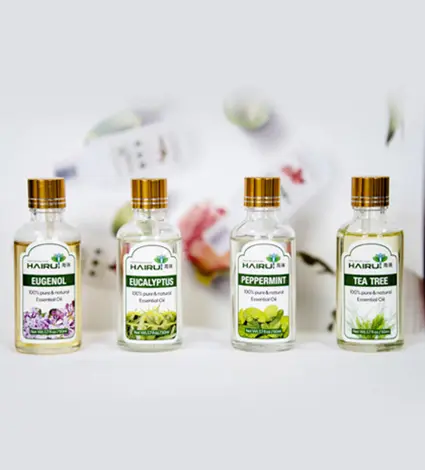
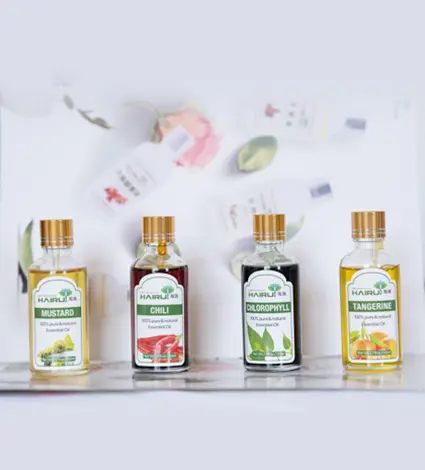
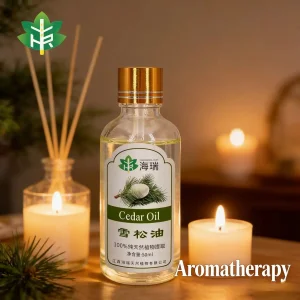
Extracted via steam distillation and cold compression. Our raw materials are optimized for food, cosmetics, and fragrance compounds. Featured items include eucalyptus oil, tea tree oil, and peppermint oil, all processed under strict quality control.
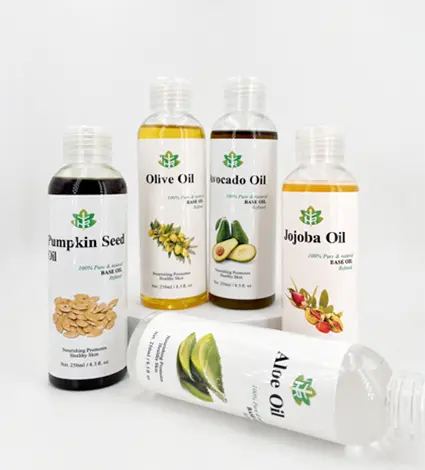

Typically extracted via cold-pressing, these carrier oils are highly beneficial for diluting active essential oils before dermal application. Many, like jojoba and rosehip oil, carry inherent medicinal properties and serve as base emulsions.
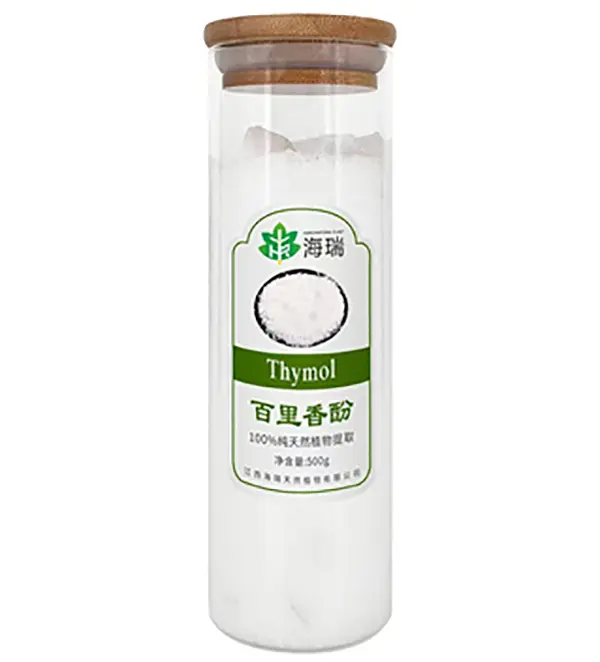
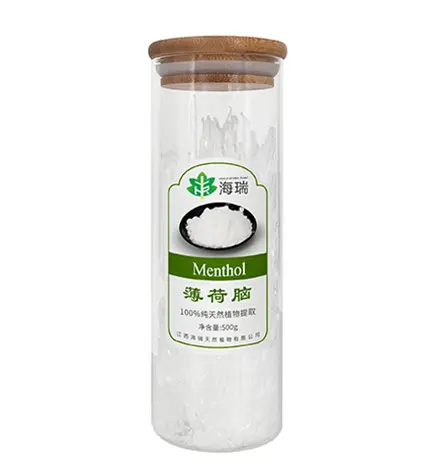
Separated under clean crystallization and distillation profiles. Leveraging our 5,000+ acre raw material production base, we monitor seedling growth, cultivation, and harvest to secure raw materials with excellent biological quality.

Rich in essential fatty acids and active vitamins. Light yellow liquid with a sweet, berry-like aroma, optimized for anti-aging skincare complexes.
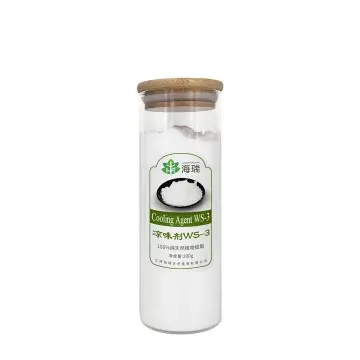
99% purity white crystalline powder (CAS 39711-79-0) offering high-efficiency cooling effects without minty taste or odor interference.
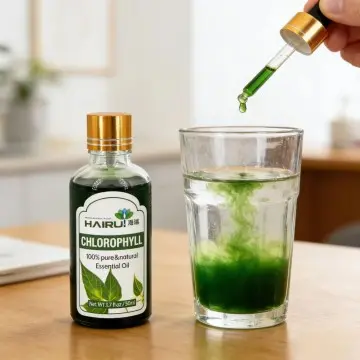
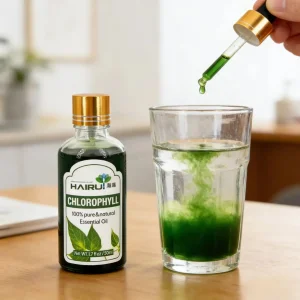
Dark green botanical dye extracted from natural plant matter, providing stable coloring solutions for food, beverages, and cosmetic packaging.
Founded in 2006, Jiangxi Hairui Natural Plant Co., Ltd. is an enterprise specializing in the production and sale of high-purity natural plant extracts, essential oils, and terpene chemical intermediates. Located in the Jinggang Mountain High-Tech Development Zone in Ji'an, we benefit from rich botanical resources and geographical access.
With a capital investment of RMB 50 million, our plant covers 13,000 square meters. The facility is equipped with analytical instruments (including GC-MS, refractive index testers, polarimeters, and density meters) that support an annual production capacity of 2,000 tons of natural essential oils and intermediates.
Understanding the international compliance hurdles and quality management procedures required for terpineol export.
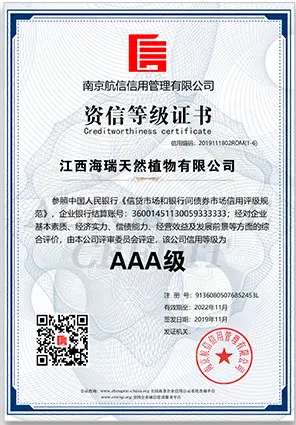
For B2B chemicals, regulatory compliance is non-negotiable. Sourcing terpineol from us ensures that materials meet target country regulations. We provide complete chemical documentation to ensure seamless clearance at customs and direct integration into your manufacturing cycles.
Depending on whether the final application is within cosmetics, flavor compounding, industrial detergents, or electronic circuit boards, our terpineol complies with several global regulatory guidelines:
To secure a reliable chemical profile, we employ a 9-step quality control system starting at the raw turpentine stage and continuing to final cargo dispatch:
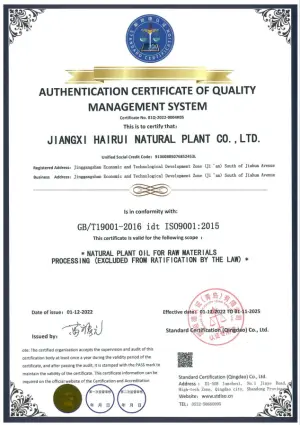
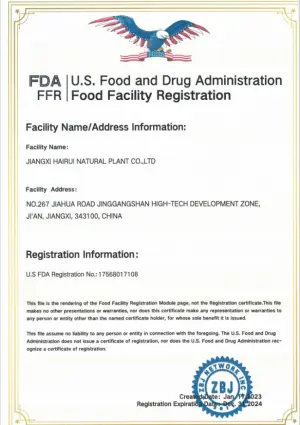
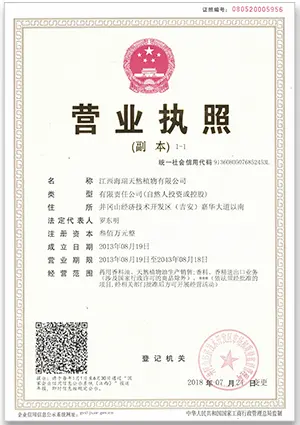
Expert answers to common chemical procurement, logistic options, and application engineering questions.
Preserving the complete range of our manufacturing line, fully documented and ready for direct global container logistics.