Finding a reliable source for Jasmine Hydrosol in China takes more than comparing prices. Buyers should look for suppliers who can explain their botanical sourcing, distillation methods, and quality checks in clear terms. China has producers and exporters with different capabilities, from small distilleries to larger processing facilities. The right fit depends on your order volume, product specifications, and preferred level of supplier support.
Ask for the botanical name, plant-part details, country or region of origin, and a recent batch-specific analysis where available. Request a sample before placing a large order. Check its aroma, appearance, packaging, and consistency against the supplier’s written specifications. Details matter. Suzanne Catty, author of Hydrosols: The Next Aromatherapy, has highlighted the delicate nature of hydrosols and the importance of careful production and handling. Her work offers a useful reminder: a floral scent alone cannot establish product quality.
When comparing Chinese wholesalers, discuss minimum order quantities, lead times, storage conditions, packaging options, and export documentation. Ask how the product is protected from heat and light during storage and transit. A responsive supplier should answer specific questions and provide documents that match the offered batch. Ask for proof. No single certificate or attractive catalogue guarantees a suitable purchase. This guide explores practical ways to identify potential suppliers, assess product information, request samples, and compare wholesale terms. Careful checks can reduce avoidable surprises, though buyers should still verify that each supplier’s claims meet their own specifications.
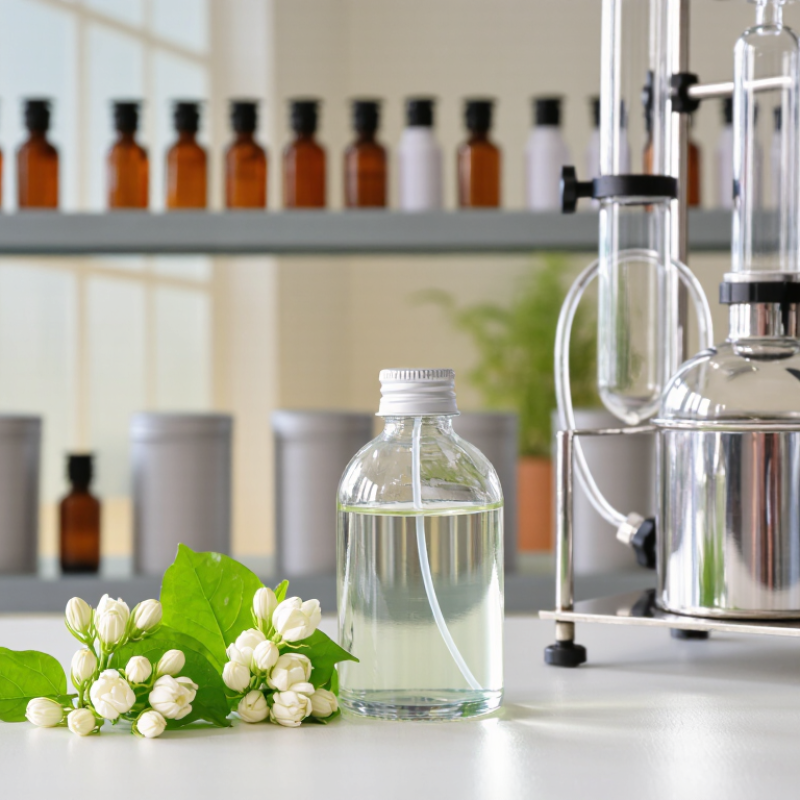
Jasmine hydrosol is the aromatic water collected during steam distillation of jasmine flowers. It is not the same as jasmine essential oil diluted with water. Its scent is usually softer, and each batch can smell slightly different. That variation is normal, but it should be explained by the supplier. Wholesale buyers may use hydrosol in facial mists, rinse-off products, or linen sprays. It contributes fragrance and a water-based ingredient, not a proven treatment for skin concerns. I would not treat a strong scent as proof of quality. Not always.
When sourcing in China, ask how the hydrosol is distilled, filtered, and stored. Request a recent sample, batch specifications, and available quality documents, such as microbial test results. Check the scent, appearance, packaging seal, and batch consistency before discussing larger volumes. Confirm the minimum order quantity, lead time, and whether the supplier can provide repeat batches. A sample that smells pleasant today may not represent every future shipment.
Tips: Ask for samples. Keep batch notes, including color and scent. Clarify whether preservatives are present and how long the product stays usable after opening. If details are vague, pause and ask again.
Before asking where to buy jasmine hydrosol wholesale in China, define what the product must do for your business. Specify the intended use, preferred packaging, estimated order volume, and delivery schedule. Ask whether the hydrosol is steam-distilled, and request the botanical name and plant-part details. These details help prevent confusion between a true distillate and a fragranced water. Small details matter.
Set quality requirements before comparing prices. Request a recent batch specification, a certificate of analysis when available, and clear information about storage and shelf life. Check that the supplier can explain its testing methods and traceability records. Start with a sample, then assess its aroma, appearance, packaging, and consistency against your written criteria. Natural batches may vary slightly. That is worth discussing, not ignoring.
Tips: Ask for the production date, batch number, and sample quantity in writing. Confirm how the product will be protected from heat and light during transit. Keep a retain sample from an approved batch for comparison. If a specification is vague, ask follow-up questions; I would not treat a polished document as proof by itself. Compare suppliers using the same checklist, including minimum order quantities and replacement terms for quality concerns.
When finding wholesale jasmine hydrosol suppliers in China, ask for the botanical name, plant part, and distillation method. “Jasmine hydrosol” can describe products made through different processes, so the label alone is not enough. Request a recent batch certificate of analysis, microbiological results, pH, and a sample from the same production lot. Check whether the supplier can explain its water source, filtration, filling conditions, and storage guidance. Small details matter. A clean-looking sample is not proof of consistent quality.
Market reports offer context, but not a shortcut. Grand View Research’s 2024 Essential Oils Market Size, Share & Trends Analysis Report valued the global essential oils market at USD 23.74 billion in 2023 and projected an 8.7% compound annual growth rate from 2024 to 2030. This is a broad category, not a jasmine hydrosol forecast. Treat it accordingly. Compare suppliers using written specifications, batch records, sample consistency, minimum order quantity, lead time, and export packaging details. Ask how the supplier handles changes between harvests; the answer may be imperfect, and that is worth discussing. A polished catalogue can still hide gaps. Request clarification before paying for a large order.
| Sourcing route or area | Relevant sourcing context | What to confirm about the hydrosol | Wholesale checks | Useful documents or evidence |
|---|---|---|---|---|
| Hengzhou, Guangxi | Hengzhou is a major jasmine-growing and jasmine-processing area in China. Local flower production makes it a practical place to investigate origin-linked supply. | Ask whether the supplier distills jasmine flowers into hydrosol or sells another jasmine product. Confirm botanical name, plant part, production location, and whether the product is diluted or blended. | Request a current sample and written quotation. Confirm available pack sizes, minimum order quantity, lead time, and whether supply is seasonal. | Product specification, batch-specific certificate of analysis if available, process description, and traceability information for the flower source. |
| Jasmine distillers and botanical processors in China | A processor may produce hydrosols through distillation, but location near a flower-growing area alone does not establish that it manufactures the product. | Ask for the distillation method and a clear distinction between jasmine hydrosol, jasmine essential oil, jasmine absolute, and fragranced water. These are different products. | Check whether the quoted price is for pure hydrosol or a formulated product. Confirm preservatives, added fragrance, storage conditions, and shelf life. | Ingredient list, manufacturing details, safety data sheet where applicable, batch and expiry details, and test results relevant to the intended use. |
| Cosmetic-ingredient distributors in major commercial hubs | Distributors in large commercial centers can offer consolidated sourcing and export support. A distributor’s location does not necessarily indicate where the hydrosol was made. | Request the actual manufacturing origin and identify whether the seller is the manufacturer, an authorized distributor, or a trading intermediary. | Compare sample consistency, available inventory, order terms, export packing, payment terms, and the process for handling quality claims. | Manufacturer details, product specification, country-of-origin information, batch records, and export or customs documents as applicable. |
| Online wholesale marketplaces and sourcing directories | Online listings can help identify potential sellers across China, but listing descriptions and supplier claims should be independently checked. | Ask for recent product photos, a sample from the same production specification, and confirmation of the botanical source and manufacturing site. | Compare written quotations using the same grade, packaging, order quantity, shipping terms, and destination. Do not rely on a listing price alone. | Business registration details, factory or production evidence, product documents, transaction terms, and a verifiable business contact. |
| Contract manufacturing or private-label sourcing | Some processors may discuss custom packaging or private-label production. Availability depends on the facility and should be confirmed directly. | Agree on the formula, permitted ingredients, fragrance profile, packaging material, and whether the hydrosol will be preserved or blended before production. | Obtain written confirmation of minimum order quantity, sample and setup costs, production timeline, artwork requirements, and responsibility for regulatory compliance. | Approved specification, formula or ingredient declaration, packaging specification, quality agreement, and pre-shipment inspection records if required. |
| Import-ready bulk supply | For overseas buyers, the seller’s export experience and the destination country’s import rules can be as important as the product’s sourcing location. | Confirm intended use, ingredient declaration, packaging suitability, storage requirements, and any destination-market restrictions before ordering. | Confirm Incoterms, shipping method, carton or drum details, transport temperature requirements if any, and responsibility for customs documentation. | Commercial invoice, packing list, certificate of origin where required, safety and product documents, and any documents required by the destination market. |
Buyer note: Supplier availability, minimum order quantities, prices, and lead times vary and should be confirmed directly. Request a sample and verify the product specification before placing a wholesale order.
When sourcing jasmine hydrosol wholesale in China, verify the supplier before discussing large volumes. Request its registered business details, production address, and a live video tour of the filling area. Ask who distills the product and whether production is in-house or subcontracted. A neat brochure is not proof. Small details matter: sealed sample bottles, batch labels, and clear answers about storage.
Evaluate a recent sample against the supplier’s written specification. Check the aroma, appearance, and packaging, then ask how the product is tested for pH, microbial quality, and other relevant parameters. Hydrosol is water-based, so handling and storage can affect its condition. Request a batch-specific certificate of analysis, test methods, safety data sheet, and ingredient statement. Confirm that the botanical name and plant part are stated consistently across the documents. If a result is unclear, ask for the laboratory report rather than relying on a verbal assurance.
Before placing an order, compare the sample, specification, and final batch documents. Check production and expiry or retest dates, storage guidance, shipment conditions, and traceability details. For repeat orders, agree on written acceptance criteria and retain a sealed reference sample. I would not assume a familiar floral scent proves authenticity; scent can vary, and that judgment has limits. A careful supplier should welcome reasonable questions, though paperwork alone cannot guarantee every batch will match.
When comparing jasmine hydrosol wholesale prices in China, request quotes for the same specifications: botanical name, extraction method, origin, batch size, and packaging. A low price may reflect a different concentration, harvest, or quality-control scope. Ask for a recent batch’s certificate of analysis, microbiological results, pH, and production date. Compare the delivered cost, not just the price per kilogram. Small details matter.
Order a sample before committing to a large volume. Check its aroma, clarity, and packaging condition, then agree in writing on the accepted specifications and remedies for a mismatched shipment. Start with a modest trial order if the supplier is new. It is less efficient, but it can expose gaps in communication early. Confirm lead time, payment milestones, minimum order quantity, and whether the seller can provide export documents.
Shipping deserves its own comparison. UNCTAD’s Review of Maritime Transport 2024 reports that shipping carries over 80% of world trade by volume, but a low freight quote may not include every handling charge. Ask for separate sea and air estimates, including insurance, customs-related service fees, transit time, and temperature or light-protection options. Hydrosol is water-based, so secure, leak-resistant containers and clear carton dimensions help prevent avoidable delays. Check the route and delivery terms before paying; I would not assume the cheapest quote is the simplest one.
Write down the intended use, preferred packaging, estimated volume, and delivery schedule. Small details matter.
Ask whether it is steam-distilled. Request the botanical name and the plant part used. A clear answer helps distinguish a distillate from fragranced water.
Ask for a recent batch specification and, when available, a certificate of analysis. Request testing methods, traceability records, storage guidance, and shelf life. A polished document alone is not proof.
Check its aroma, clarity, packaging, and consistency against your written criteria. Record the production date and batch number. Natural batches may vary slightly.
Request quotes using the same botanical name, extraction method, origin, batch size, and packaging. Compare delivered cost, not only price per kilogram. A cheaper quote may describe a different product.
Yes. Start with a modest volume and agree on accepted specifications and remedies in writing. It takes more time, but can reveal communication gaps.
Compare separate sea and air estimates. Ask about insurance, handling charges, transit time, and temperature or light protection. Check delivery terms before paying.
Request secure, leak-resistant containers and confirm carton dimensions. Hydrosol is water-based, so packaging matters. No checklist catches everything. Keep a retain sample from an approved batch for comparison.
Jasmine Hydrosol is a fragrant floral water used in personal care, cosmetics, home products, and other formulations. Before buying wholesale, define how it will be used and set clear requirements for its aroma, appearance, ingredients, packaging, quantity, and quality. These details help narrow the search and make supplier offers easier to compare.
When sourcing in China, contact several potential suppliers and ask about production capabilities, minimum order quantities, lead times, and sample availability. Verify product specifications and request relevant quality records and documentation before committing. Compare the full cost, including packaging and shipping, rather than focusing only on the unit price. Once the product and supplier meet your requirements, confirm the order details in writing and arrange delivery with clear expectations for timing, handling, and communication.
