
How to Source Quality Rose Hydrosol in 2026?

Time:2026-09-23 Author:Aria
0%

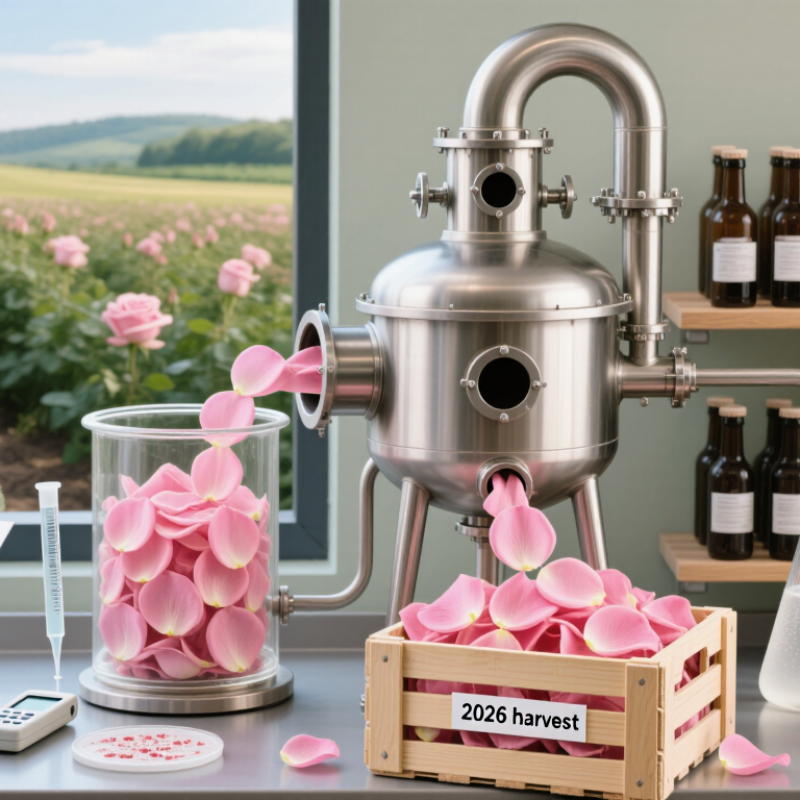
Sourcing quality Rose Hydrosol in 2026 requires more than comparing prices and attractive labels. The real assessment begins at the distillery. Visit the source when possible. Observe fresh rose petals entering a clean copper or stainless-steel still. Notice the harvest time, water quality, distillation temperature, and collection method. These details shape the aroma, clarity, and shelf stability of the final hydrosol.

Herbal educator Jeanne Rose explains, “A hydrosol is the water that is left after the essential oil has been distilled from the plant.” This simple description highlights an important point. Rose Hydrosol is not merely scented water. It is a delicate botanical product that needs careful handling. A reliable supplier should provide the botanical name, growing region, harvest date, batch number, packaging details, and storage guidance. Independent microbiological testing matters too. Ask for pH results, preservative information, and a current certificate of analysis. Clear documentation builds trust.

However, sourcing is rarely perfect. A beautiful fragrance does not guarantee purity. A completely clear liquid may still need testing. Even experienced buyers can overlook weak traceability or unsuitable packaging. I have learned to question convenient claims, especially when specifications seem vague. Dark glass, tamper-evident seals, cool storage, and small trial orders can reduce avoidable risks. This guide examines practical supplier checks, quality indicators, testing expectations, and common purchasing mistakes. It aims to help brands choose Rose Hydrosol with stronger evidence, clearer judgment, and fewer assumptions.
How to Source Quality Rose Hydrosol in 2026?

Define Rose Hydrosol Quality: Botanical Identity, pH 4–6, and Zero Pathogens

Sourcing quality rose hydrosol in 2026 starts with botanical identity, not fragrance alone. The supplier should state Rosa damascena or another exact species, plant part, harvest region, and distillation method. A vague label creates traceability problems. ISO 9235:2021 provides terminology for natural aromatic raw materials, supporting clearer documentation and identity checks.

pH should normally fall between 4 and 6 when tested at a controlled temperature. Record the value for every lot, preferably with a calibrated meter and a dated certificate of analysis. A sharp change may indicate dilution, contamination, or unstable storage. Appearance can mislead. Clear liquid is not proof of quality, and I have seen pleasant aromas receive too much trust.

Microbiological evidence matters more than marketing language. ISO 17516:2014 requires the absence of specified pathogens, including Staphylococcus aureus and Pseudomonas aeruginosa, in 1 gram or 1 millilitre of cosmetic products. Request batch-specific testing, not an old generic report. The 2023 SCCS Notes of Guidance also emphasize stricter microbiological control for products used near sensitive areas. “Zero pathogens” should mean documented absence under validated methods, not absolute sterility. That distinction is easy to miss. Verify yeast, mould, total microbial count, packaging integrity, and storage conditions before approving the hydrosol.

Verify Distillation Provenance: Harvest Date, Origin, Batch Code, and Method

How to Source Quality Rose Hydrosol in 2026?

Verify Distillation Provenance: Harvest Date, Origin, Batch Code, and Method

Quality rose hydrosol begins with traceable flowers, not attractive packaging. Ask for the harvest date, growing region, botanical species, and distillation site. The batch code should connect to production records, water quality results, and microbiological testing. Request the original certificate of analysis, not a redesigned summary.

The distillation method matters. Steam distillation, vessel material, water source, and processing duration can change aroma and stability. A fresh batch may smell green, honeyed, or slightly earthy. It should not smell sharply synthetic. I once accepted an attractive sample without checking its harvest season. That was careless. Floral water can lose character during long storage, especially under heat and light.

Grand View Research’s 2024 rose water market analysis forecasts approximately 8% annual growth through 2030, increasing pressure on suppliers and documentation quality. Rapid market expansion can reward vague sourcing claims. ISO 22716 provides useful guidance for cosmetic manufacturing controls, while ISO 16128 helps assess natural-origin terminology. Neither standard proves a hydrosol’s harvest story. Verify the evidence yourself.

Check whether the origin matches the climate and flowering calendar. Compare the batch code across the drum, invoice, and laboratory report. Keep retained samples in dark, cool storage. Small inconsistencies matter. When records conflict, pause the purchase.

Screen Chemistry with GC–MS: Confirm Rose Markers and Detect Adulterants

How to Source Quality Rose Hydrosol in 2026?

In practical sourcing, GC–MS is a strong first screen for rose hydrosol chemistry. Request a sample from the exact production batch. Do not rely on a generic certificate. A qualified laboratory can compare the chromatogram with validated rose references. Common rose markers include phenethyl alcohol, citronellol, geraniol, and nerol. Their relative levels matter more than one impressive peak. Natural variation still occurs. Climate, harvest timing, distillation temperature, and storage can change the profile.

Ask the laboratory to inspect unusual peaks and unexpected ratios. Synthetic fragrance materials may create a sharp, overly uniform pattern. Added solvents, preservatives, or another floral distillate can also distort the result. GC–MS may reveal these signals, but it cannot prove every form of dilution. The sample should be tested with a documented method, calibrated instruments, and clear detection limits. Keep the original sealed sample for future comparison. Chain-of-custody records are useful.

Review the report with an experienced chemist, not only a salesperson. The water matrix can complicate volatile recovery, so sample preparation deserves attention. I would also compare odor, pH, appearance, and microbiological results. These checks support the chemistry but do not replace it. An honest supplier should explain deviations instead of hiding them. One limitation remains: marker ranges are not universal. A result can look acceptable and still need further investigation. Ask for repeat testing when the chromatogram seems unusually perfect.

How to Source Quality Rose Hydrosol in 2026? - Screen Chemistry with GC–MS: Confirm Rose Markers and Detect Adulterants

GC–MS reference screening framework for authentic rose hydrosol. Marker presence should be assessed together with retention-index confirmation, mass-spectrum matching, sample preparation controls, and a complete chromatographic profile.

Analyte or Control CAS Registry Number Molecular Formula Relative Molecular Mass Role in Rose-Hydrosol Screening Authenticity Interpretation Screening Status
Rose-associated volatile markers
2-Phenylethanol 60-12-8 C8H10O 122.16 g/mol A major rose-like alcohol commonly associated with the characteristic floral profile of rose distillates. Detection supports a rose-type aromatic profile, but it is not conclusive on its own because 2-phenylethanol also occurs in other flowers and can be added as an isolated fragrance material. Expected marker
Citronellol 106-22-9 C10H20O 156.27 g/mol Important monoterpene alcohol contributing fresh, citrus-like and rosy notes. Should be evaluated with geraniol, nerol, linalool and 2-phenylethanol rather than used as a single authenticity criterion. Expected marker
Geraniol 106-24-1 C10H18O 154.25 g/mol Unsaturated monoterpene alcohol with a sweet, floral and green-rosy odor contribution. A consistent peak supported by a matching retention index is compatible with rose distillate chemistry; an isolated high peak may indicate fragrance addition or concentration. Expected marker
Nerol 106-25-2 C10H18O 154.25 g/mol Cis-isomer of geraniol that contributes a soft floral and citrus character. The geraniol-to-nerol relationship and the overall terpene pattern can help distinguish a natural distillate from a simplified fragrance blend. Expected marker
Linalool 78-70-6 C10H18O 154.25 g/mol Monoterpene alcohol with floral, citrus and slightly woody odor characteristics. Useful as part of the complete volatile fingerprint; unusually dominant linalool with weak rose-associated markers warrants further review. Expected marker
Rose oxide 16409-43-1 C10H18O 154.25 g/mol Highly odor-active rose-related terpene contributing a characteristic green, rosy and metallic nuance. Presence can strengthen the rose profile, but concentration may vary substantially with cultivar, harvest conditions, distillation design and storage. Confirmatory marker
Eugenol 97-53-0 C10H12O2 164.20 g/mol Phenylpropanoid with clove-like, spicy and phenolic odor characteristics. May occur at low levels in some botanical materials. A strong, isolated eugenol signal can suggest added clove-like fragrance, cross-contamination or an atypical botanical profile. Review level
Potential adulteration or profile-distortion indicators
Methyleugenol 93-15-2 C11H14O2 178.23 g/mol Phenylpropanoid that may be detected as a naturally occurring trace constituent or as a fragrance-related contaminant. Quantification and regulatory review are important. A high or unexpected result should be investigated against the applicable market requirements and product-use category. Regulatory review
Benzyl alcohol 100-51-6 C7H8O 108.14 g/mol Common aromatic alcohol that can occur naturally in floral materials and can also be introduced through formulation or preservation practices. Presence alone does not prove adulteration. A high level without a coherent rose-marker pattern should trigger review of added solvents, preservatives or fragrance materials. Context required
Synthetic fragrance pattern Not applicable Not applicable Not applicable Repeatedly dominant isolated peaks, simplified terpene composition or an unusual balance of rose alcohols. Compare the full chromatogram with a verified reference batch and review whether the profile is chemically coherent rather than relying on one named compound. Investigate
Non-rose essential-oil signature Not applicable Not applicable Not applicable Strong signals associated with another botanical source, especially when rose-associated markers are weak or absent. May indicate dilution, substitution, cross-contamination or blending with another hydrosol or essential oil. Investigate
GC–MS quality-control dimensions
Mass-spectrum match Instrumental criterion Not applicable Not applicable Compare each reported peak with a validated spectral library and laboratory reference material. Library similarity should not be used alone because structurally related compounds can produce similar spectra. Required
Retention-index confirmation Instrumental criterion Not applicable Not applicable Calculate retention indices using an alkane series under the same chromatographic conditions. Agreement between retention index and mass spectrum substantially improves compound identification confidence. Required
Process blank Quality-control sample Not applicable Not applicable Run a blank through sample preparation and analysis to identify solvents, vials, septa or laboratory carryover. Peaks found in the blank should not be misinterpreted as botanical constituents. Required
Internal standard Method-control material Method dependent Method dependent Use a suitable internal standard to monitor injection consistency and support semi-quantitative comparison. The internal standard should be absent from the natural sample and chemically stable under the analytical conditions. Recommended
Replicate injections Precision check Not applicable Not applicable Analyze replicate preparations or injections to assess repeatability of marker detection and relative peak areas. Large variation between replicates can indicate poor mixing, unstable volatiles, matrix effects or an unsuitable extraction procedure. Recommended
Sample metadata Traceability criterion Not applicable Not applicable Record botanical species, plant part, harvest period, distillation date, storage conditions, packaging and sample age. Rose-hydrosol chemistry naturally varies with raw material and processing; metadata is essential when comparing batches. Required
Reference note: This table is a screening and sourcing framework, not a universal pass/fail specification. Authentic rose hydrosol can vary with species, cultivar, geographic origin, harvest conditions, distillation method, concentration, filtration and storage. Final acceptance should use a validated laboratory method, a representative reference profile and the regulatory requirements of the intended market.

Validate Microbiology: ISO 21149, ISO 16212, and ISO 18416 Testing

How to Source Quality Rose Hydrosol in 2026?

Microbiology testing should guide every rose hydrosol purchase. Request recent, batch-specific reports from an independent, competent laboratory. ISO 21149 measures aerobic mesophilic microorganisms, helping reveal overall bacterial load. ISO 16212 evaluates yeasts and molds, which can grow in water-rich products. ISO 18416 checks for Candida albicans, an important specified microorganism. These tests answer different questions. One result cannot replace the others.

Review the sample date, batch code, test method, detection limits, and laboratory approval details. The sample should represent the same production batch you plan to buy. A clean-looking bottle proves very little. Rose hydrosol may appear fresh while carrying invisible contamination. Check storage records, filling conditions, container hygiene, and preservative use. Ask whether testing occurred before shipment or after storage simulation. Small details matter.

Do not treat a certificate as absolute proof. Microbial results depend on sampling, transport, and laboratory technique. A supplier may pass one test and still provide weak traceability. That deserves a pause. Test results should align with sensory checks, production records, and a documented quality system. I would also retain a sealed reference sample for comparison during incoming inspection. This step is easy to overlook. Specifications may need adjustment after real-world stability data, because a beautiful initial report does not guarantee consistent performance in every climate.

Audit Suppliers: ISO 22716 GMP, COA Traceability, Stability, and Compliance

How to Source Quality Rose Hydrosol in 2026?

Sourcing quality rose hydrosol requires more than reviewing a pleasant aroma sample. During supplier audits, request evidence of ISO 22716 GMP controls, not only a certificate. Inspect production rooms, water systems, sanitation records, and batch handling procedures. Ask how staff prevent contamination during filling and storage.

Every shipment should have a traceable COA linked to a specific lot number. Check the botanical name, plant origin, production date, pH, appearance, odor, and microbiological results. Heavy metal and preservative information may also matter for your formulation. A polished COA can still leave questions. Verify that an independent laboratory issued the results, when applicable.

Stability evidence deserves careful attention. Request accelerated and real-time data in suitable packaging, including closure compatibility and storage conditions. Confirm that the supplier defines shelf life after opening. Compliance also depends on your selling market, product category, label language, and cosmetic claims. Avoid accepting “natural” as proof of safety or regulatory suitability.

I have learned that audits rarely feel complete. A missing cleaning log or unclear water specification can reveal weak controls. Ask for corrective-action records and recent internal audit findings. Some suppliers may answer slowly, but vague answers should not be ignored. Keep documented decisions, retain samples, and compare each new lot against approved specifications.

How to Source Quality Rose Hydrosol in 2026?

Supplier audits should verify GMP controls, complete COA traceability, documented stability evidence, and regulatory compliance before approval.

The chart uses a transparent internal audit model: each criterion is weighted according to its practical importance when qualifying a rose hydrosol supplier. It is not based on company or brand data.

FAQS

What documents should I request before buying rose hydrosol?

Request the harvest date, growing region, botanical species, distillation site, batch code, and original certificate of analysis. Keep every record. The batch code should match the drum, invoice, and laboratory report.

Why does the harvest date matter?

Rose hydrosol can lose aroma during long storage, especially under heat and light. Fresh material may smell green, honeyed, or slightly earthy. A sharp synthetic odor deserves investigation.

How can I verify the product’s origin?

Compare the stated region with its climate and flowering calendar. Ask whether the flowers were processed near the growing area. Small inconsistencies matter.

What should I know about the distillation method?

Ask about steam distillation, vessel material, water source, and processing duration. These factors can change aroma, stability, and chemical composition. Details matter here.

What is GC–MS testing used for?

GC–MS can screen rose markers, unusual peaks, and possible fragrance or solvent additions. Common markers include phenethyl alcohol, citronellol, geraniol, and nerol. One peak proves little.

Can a laboratory report guarantee authenticity?

No. Marker levels naturally vary with climate, harvest timing, temperature, and storage. GC–MS also cannot prove every type of dilution. Further testing may be needed.

How should I evaluate a GC–MS report?

Confirm that it tests the exact production batch, not a generic sample. Check the method, instrument calibration, detection limits, and chain-of-custody records. Ask an experienced chemist to review unusual ratios.

What other quality checks should accompany chemical testing?

Compare the odor, pH, appearance, water quality, and microbiological results. These checks support chemistry but do not replace it. Keep a sealed retain sample in a cool, dark place.

What should I do when supplier records conflict?

Pause the purchase and request clarification before accepting the material. Ask for repeat testing when the chromatogram looks unusually perfect. I once trusted attractive packaging. That was careless.

Conclusion

Sourcing quality Rose Hydrosol in 2026 requires a structured approach that goes beyond appearance and fragrance. Start by confirming the botanical identity, a balanced pH between 4 and 6, and the absence of harmful pathogens. Reliable documentation should include the harvest date, geographic origin, distillation method, and a traceable batch code. These details help verify freshness, authenticity, and production consistency.

Chemical and microbiological testing are equally important. GC–MS analysis can confirm characteristic rose markers while identifying possible dilution or adulteration. Independent laboratory checks based on ISO 21149, ISO 16212, and ISO 18416 can evaluate overall microbial quality and detect relevant contaminants. Finally, assess suppliers for ISO 22716 GMP practices, complete certificates of analysis, batch-level traceability, stability data, and regulatory compliance. Combining documented provenance, laboratory verification, and supplier audits provides a dependable foundation for selecting safe, authentic, and consistently produced Rose Hydrosol.

Aria

Aria

Aria is a dedicated marketing professional with a deep passion for innovative strategies and a keen understanding of our company's product offerings. With a wealth of experience in the industry, Aria excels at crafting engaging content that highlights the unique features and benefits of our......