
Patchouli Essential Oil is known for its deep, earthy aroma, often described as woody, sweet, and slightly spicy. Many people use it in diffusers, perfumes, soaps, and diluted body-care products. Its rich scent can make a quiet room feel warmer, especially during evening routines or meditation. Some users also associate it with relaxation and emotional comfort. However, personal responses differ. What feels calming to one person may seem heavy or overwhelming to another.
This guide explores what Patchouli Essential Oil may be used for, based on traditional practice, modern aromatherapy, and available safety knowledge. It may support a pleasant fragrance experience, but it should not be presented as a cure for medical conditions. Evidence for many claimed benefits remains limited or mixed. That matters. Essential oils are concentrated substances, not harmless water-based fragrances. They should usually be diluted in a suitable carrier oil and tested on a small skin area first. Direct contact with the eyes, broken skin, and sensitive areas should be avoided. Pregnant individuals, children, people with allergies, and those taking medication may need professional advice before use. Product quality also varies, so checking botanical names, ingredients, and reputable testing information is worthwhile. Even experienced users can misjudge strength. A few drops may fill a room quickly. Careful use is more reliable than impressive promises.
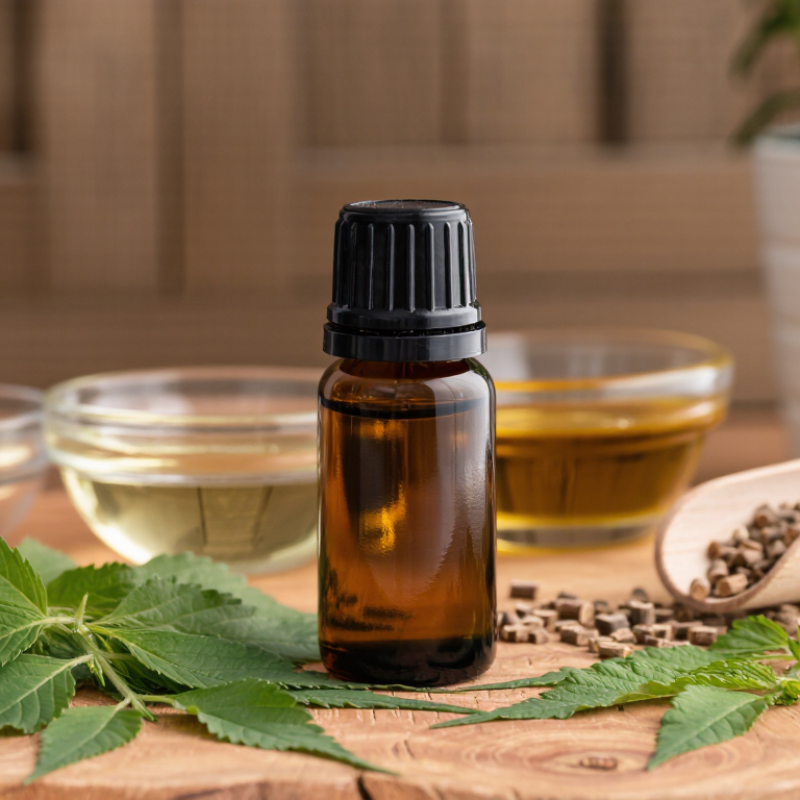
Patchouli essential oil comes from Pogostemon cablin, a leafy aromatic plant in the mint family, Lamiaceae. It is not the same plant as common garden mint. The oil is usually obtained by steam distilling its dried leaves. Freshly distilled oil may smell sharp, green, and earthy. After resting, its aroma often becomes warmer, woody, and slightly sweet.
Its main identifying component is patchoulol, a sesquiterpene alcohol associated with patchouli’s deep, lasting scent. Other reported constituents include alpha-patchoulene, beta-patchoulene, caryophyllene, and pogostone. Their proportions can change with soil, climate, leaf maturity, drying time, and distillation conditions. The chemistry is not perfectly fixed. That matters when comparing oils from different regions or harvests.
In practical use, patchouli oil is valued in perfumery, personal fragrance, and atmospheric scenting. Some people dilute it in a carrier oil for external use, but skin sensitivity remains possible. A patch test is sensible. I would not treat its traditional uses as medical proof. Quality assessment should consider the botanical name, batch information, extraction method, and independent chemical testing when available. Adulteration and oxidation can alter both the smell and safety profile. The earthy note can be beautiful, though it may feel heavy in a small room.
| Data Dimension | Verified Information |
|---|---|
| Common name | Patchouli essential oil |
| Accepted botanical name | Pogostemon cablin (Blanco) Benth. |
| Botanical family | Lamiaceae, the mint family |
| Plant type | Aromatic, perennial herb with soft, hairy leaves and small flowers |
| Geographical background | The species is associated with tropical and subtropical Asia and is cultivated in several warm, humid regions. |
| Plant material used | Primarily the leaves and leafy aerial parts |
| Typical extraction method | Steam distillation of dried or partially dried leaves and aerial parts |
| Appearance | Usually a clear to yellow, amber, or brownish liquid; color can vary with age, processing, and storage. |
| Aroma profile | Deep, earthy, woody, sweet, and slightly camphoraceous, with a warm balsamic character |
| Key naturally occurring component | Patchoulol, also known as patchouli alcohol; a sesquiterpene alcohol strongly associated with the characteristic patchouli aroma |
| Other commonly reported components | α-Bulnesene, α-guaiene, seychellene, caryophyllene, norpatchoulenol, and related sesquiterpenes |
| Composition variability | The relative amounts of constituents can differ according to plant genetics, growing conditions, harvest time, drying, distillation, storage, and chemical profile. |
| Perfumery use | Used as a rich base note to add earthy depth, warmth, sweetness, and long-lasting character to fragrance compositions. |
| Cosmetic and personal-care use | Included in some soaps, lotions, creams, hair products, and bath formulations primarily for its distinctive fragrance. |
| Aromatherapy use | Commonly diffused or diluted for its grounding, earthy aroma; perceived effects can vary from person to person. |
| Traditional topical applications | Traditionally used in diluted preparations for massage and skin-care applications; traditional use does not establish medical effectiveness. |
| Household and environmental use | Used in fragrance blends, potpourri, and some natural insect-repellent formulations; laboratory findings may not predict real-world performance. |
| Safety considerations | Essential oils are concentrated substances. Dilute before skin use, perform a patch test, avoid contact with eyes, and do not ingest unless directed by a qualified professional. |
| Storage guidance | Keep tightly closed in a cool, dark place away from heat, light, and air to help preserve aroma and quality. |
Note: The chemical profile and practical uses of patchouli essential oil can vary by source and processing method. Aromatherapy and traditional uses should not be interpreted as medical claims.
It is mainly used in massage oils, bath products, personal care, and room diffusion. Its deep, earthy aroma can create a calming ritual.
No reliable human evidence supports treating these conditions with patchouli oil. Do not use it as a replacement for medical care. That matters.
Mix one drop with about five milliliters of carrier oil for a 1% dilution. Experienced adults may use up to 2% briefly. Use less when uncertain.
Yes. Apply diluted oil to a small skin area and wait 24 hours. Stop if redness, burning, itching, or swelling develops. Small tests help.
Evidence for hair growth remains lacking. A diluted scalp massage may add fragrance and comfort. The carrier oil may provide most conditioning effects.
Some people find its woody aroma grounding, but clinical evidence remains mixed. Use a ventilated diffuser and avoid breathing directly over it. Pleasant does not mean proven.
Pregnant people, children, people with asthma, allergies, or sensitive skin should seek advice. Medication users should also ask a qualified professional. Personal sensitivity varies.
Keep the bottle tightly closed in dark glass. Store it below 25°C, away from sunlight, heat, and bathroom humidity. Keep it away from children and pets.
Replace it if the aroma becomes sharp, sour, or unusually thick. Oxidized oil may irritate skin more easily. I once assumed natural meant gentle. That was too simple.
Patchouli Essential Oil is a fragrant oil distilled from the leaves of the patchouli plant, a tropical herb known for its deep, earthy, and slightly sweet aroma. Its main natural components contribute to its distinctive scent and have supported its long history in traditional wellness practices. Today, it is commonly used in aromatherapy to create a calming atmosphere and may also be included in personal-care routines for skin and hair. Some people use it in diluted blends to support the appearance of balanced, moisturized skin or to add fragrance to hair-care products.
Because essential oils are highly concentrated, Patchouli Essential Oil should be diluted with a suitable carrier oil before topical use and applied only in small amounts. A patch test is recommended, and it should not be swallowed or used near the eyes and other sensitive areas. People who are pregnant, nursing, taking medication, or managing a health condition should seek professional advice first. Store it tightly sealed in a cool, dark place, away from children and pets, to help preserve its quality and reduce safety risks.
