
Buying Osmanthus Hydrosol wholesale requires more than comparing prices on a supplier list. The product may look identical in clear bottles, yet its quality can differ significantly. Begin by confirming the botanical name, plant origin, distillation method, and production date. Ask whether the hydrosol is pure, preserved, diluted, or blended with fragrance materials. A reliable supplier should provide a current Certificate of Analysis, safety data, ingredient specifications, and batch traceability. These documents help verify consistency before you commit to a large order.
Request samples from several suppliers and test them under realistic conditions. Observe the aroma, clarity, sediment, packaging seal, and behavior after several days. Osmanthus Hydrosol should arrive in clean, light-protective containers with clear labeling. Discuss the minimum order quantity, lead time, storage requirements, payment terms, and replacement policy. Shipping conditions also matter, especially during hot seasons. Heat can affect freshness and stability.
Do not choose on price alone.
A low quotation may hide weak documentation, unstable packaging, or inconsistent batches. I have seen sourcing plans focus heavily on cost while overlooking shelf life and customer expectations. That is an avoidable mistake, although every buyer can miss a detail. Confirm the supplier’s quality system and intended cosmetic use before purchase. Check applicable import, labeling, and product-safety requirements in your market. A transparent supplier will answer specific questions without pressure. With careful sampling, documentation, and communication, wholesale buying becomes more predictable, practical, and professionally defensible.
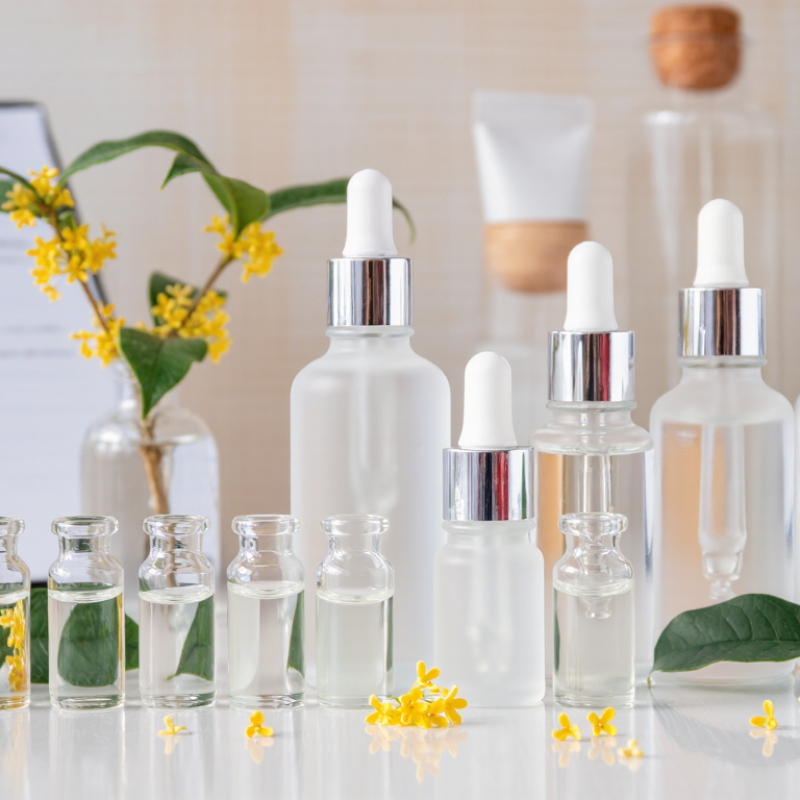
How to Buy Osmanthus Hydrosol Wholesale?
When buying osmanthus hydrosol wholesale, do not treat “premium grade” as a universal standard. The term is often a supplier’s description, not an official classification. Ask how the hydrosol was produced. Steam distillation usually gives a light, fresh floral water. Hydro-distillation may create a deeper aroma, but excessive heat can weaken delicate notes. A clear appearance is useful, yet it does not prove quality.
Origin matters more than a country name alone. Request the botanical name, growing region, harvest season, and batch traceability. Osmanthus fragrans flowers from different climates may show soft apricot, green, or tea-like nuances. Small details matter. A reliable supplier should provide production dates, storage conditions, and a certificate of analysis. Check pH, microbial results, preservative details, and packaging compatibility before ordering large volumes.
The INCI name also needs careful verification. For a true floral water, it may be listed as Osmanthus Fragrans Flower Water, but the final declaration depends on the material and processing method. Do not copy an old label without checking current documentation. I once assumed aroma strength indicated a better grade; that judgment was too simple. Fragrance can change with storage, concentration, and preservation. Request a retained sample, compare it after several weeks, and record the color, scent, pH, and microbial results. A small trial order is often wiser than a large commitment.
Wholesale buying starts with a written specification, not a sample bottle. Set pH at 4.0–6.5, then define the testing method and temperature. Osmanthus hydrosol can shift slightly after filling. I would request a retained sample from every lot. Test it after 24 hours and again after storage. pH alone does not confirm product quality. Ask for microbial results, botanical identity, production date, and a certificate of analysis. ISO 22716 provides a practical GMP framework for cosmetic production. Suppliers should also explain filtration and preservation controls.
This is where attractive quotes become less attractive.
Describe aroma with observable terms: ripe apricot, soft floral, green tea, or faint hay. Avoid “luxury” as a specification. Require a sealed reference sample and an agreed sensory panel. Record intensity at opening and after ten minutes. Color, sediment, and off-notes need acceptance limits. Minor variation is normal in botanical waters. Large variation suggests weak process control.
Grand View Research’s 2024 botanical-extracts analysis reflects growing demand for natural personal-care ingredients, but demand does not replace verification.
For packaging, choose UV-resistant amber glass or suitable opaque HDPE. Use a tamper-evident closure, leak test, lot code, net weight, and storage statement. Packaging must survive transit, not merely look clean on a shelf. NIQ’s 2023 Global Sustainability Report found that 78% of respondents considered environmental sustainability important. Yet recyclable packaging is not automatically compatible packaging. Check extractables, closure fit, and headspace. I would pilot one carton before ordering a pallet.
The overlooked detail is often the expensive one.
When buying Osmanthus hydrosol wholesale, microbial control deserves more attention than fragrance alone. ISO 17516 offers a practical reference for cosmetic product safety. For many applicable cosmetic categories, total aerobic mesophilic microorganisms should remain at or below ≤10³ CFU/g or mL. Confirm the correct category before accepting this figure.
Ask the supplier for a batch-specific certificate of analysis, not a general product sheet. Check the production date, lot number, test method, sample condition, and laboratory details. The report should also address specified microorganisms, including Pseudomonas aeruginosa, Staphylococcus aureus, and Candida albicans. A clear result matters. So does traceability.
Inspect the hydrosol’s container and handling process. Look for sealed packaging, clean filling conditions, and suitable storage temperatures. Hydrosols contain water, so contamination can increase after opening or during repeated transfers. A low count on paper is not the whole story. I have seen buyers trust one certificate too quickly, then overlook poor warehouse practices. That was an avoidable assumption. Request a retained sample when possible, and test it independently before ordering a large volume. Compare its odor, clarity, pH, and microbial results with the supplier’s records. Any unusual sediment or sour note deserves investigation.
How to Buy Osmanthus Hydrosol Wholesale?
Wholesale buying should begin with supplier comparison, not price alone. Check the MOQ against your production plan and storage capacity. A 25-kilogram MOQ may suit a growing skincare workshop. It may burden a small testing order. Confirm whether the MOQ applies per batch, fragrance grade, or packaging format. Lead time also needs detail. Ask about production scheduling, filling time, and shipping preparation. A quoted seven-day lead time may exclude testing and document approval.
Request a current COA for the exact batch. It should identify the botanical material, batch number, production date, appearance, odor, pH, and microbiological results. The SDS should explain handling, storage, spill response, and transport information. Do not accept a generic file without checking its revision date. Batch traceability connects incoming flowers, processing records, filling dates, and retained samples. That chain helps investigate an unusual odor or cloudy appearance. I have seen buyers overlook this step when samples look perfect. That assumption can become expensive.
Tips: Compare at least three written quotations. Ask for a sample with its matching COA. Check whether the commercial batch can match the approved sample. Confirm storage conditions, such as a cool, dark warehouse, and ask about shelf-life evidence. Keep every document with the purchase record. No checklist is perfect. Recheck details before payment.
How to Buy Osmanthus Hydrosol Wholesale?
Calculate Landed Cost, Shelf Life, and Regulatory Needs Before Ordering
When buying osmanthus hydrosol wholesale, do not judge the quote by price per kilogram. Calculate the full landed cost before approving a purchase. Include product price, freight, insurance, import duties, testing, storage, and payment fees. Ask for the actual shipping weight and packaging dimensions. A low-cost liquid can become expensive after customs clearance and warehouse handling. I once underestimated inner packaging costs. That mistake changed my purchasing method.
Shelf life needs practical verification, not only a printed date. Request the production date, recommended storage temperature, preservative details, and microbiological test results. Some suppliers state twelve or twenty-four months, but stability depends on formulation, packaging, and shipping conditions. Treat that range as a question, not a promise. Check whether the period applies to sealed containers or opened bottles. Keep a retained sample from each lot. Small details matter.
Before payment, define the intended use and destination market. Cosmetic, soap, and home-fragrance products may require different documents and label information. Request a certificate of analysis, safety data sheet, ingredient declaration, allergen information, and lot traceability records. Confirm whether the documents match the actual batch. A polished brochure is not enough. Regulatory rules differ by country, so verify requirements with a qualified local specialist. Do not guess. Build acceptance terms into the purchase agreement, including testing limits, container condition, and the process for handling damaged or nonconforming goods.
| Planning Area | Data Dimension | Wholesale Planning Data | How to Use It Before Ordering |
|---|---|---|---|
| 1. Product Specification and Quality Control | |||
| Product identity | Material type | Osmanthus hydrosol, also called floral water or hydrolat; it is the aqueous co-product of steam or hydro-distillation of Osmanthus fragrans flowers. | Confirm that the quotation is for hydrosol rather than an essential-oil dilution, fragrance water, or synthetic fragrance solution. |
| Composition | Water content | Normally the principal component, commonly more than 95% of the finished liquid. The exact percentage should be confirmed by the supplier's specification. | Request a current specification sheet and verify whether preservatives, solubilizers, alcohol, or other additives are present. |
| Appearance | Color and clarity | Usually clear to slightly opalescent, colorless to pale yellow or pale amber. Natural botanical variation is expected. | Define acceptable color, sediment, and odor limits in the purchase specification and retain an approved reference sample. |
| Microbiology | Microbial limits | Use the destination market's cosmetic or personal-care microbiological criteria. A typical purchasing target is total aerobic microbial count below 100 CFU/g or mL, with absence of specified pathogens where applicable. | Do not rely only on a visual inspection. Require a batch-specific certificate of analysis and, when appropriate, independent laboratory testing. |
| Preservation | Preservative system and challenge testing | Water-rich hydrosols are susceptible to bacterial, yeast, and mold growth. Preservative effectiveness depends on the formula, pH, packaging, and manufacturing hygiene. | Ask for the preservative name and concentration, pH, compatibility data, and preservative efficacy or challenge-test evidence for the intended finished product. |
| Acidity | Typical pH range | Many floral hydrosols are mildly acidic, often approximately pH 4.0–6.0, but the actual range varies by flower material, process, water, and preservation system. | Use the supplier's batch range rather than assuming a generic value. Check compatibility with the final product and packaging. |
| Traceability | Batch documentation | Recommended documents include batch number, production date, raw-material origin, net quantity, test date, storage conditions, and release status. | Make document delivery and lot traceability conditions of purchase, especially for regulated cosmetic or food applications. |
| 2. Landed-Cost Calculation | |||
| Purchase cost | Product price | Use the supplier's quoted price per kilogram or liter. Because hydrosol density is often close to water but not identical, confirm whether the quote is based on mass or volume. | Compare quotations on the same basis, such as delivered cost per kilogram, rather than comparing a price per drum with a price per liter. |
| Packaging | Container and filling charge | Common bulk formats include lined drums, jerry cans, and intermediate bulk containers. Packaging cost depends on size, material, closure, labeling, and hazardous-goods classification. | Obtain a separate line item for the container, inner liner, pallet, labels, and any export preparation. |
| Freight | International transport | Air freight is faster but usually more expensive; ocean freight is generally more economical for larger, non-urgent shipments. The quote should state the Incoterm and destination point. | Compare EXW, FOB, CIF, and DDP quotations only after identifying which transport, insurance, customs, and delivery charges are included. |
| Import costs | Duty, customs, and broker fees | Import duty and classification depend on the destination country, product composition, intended use, and customs code. Brokerage, terminal, documentation, and inspection fees may apply. | Ask a customs broker to confirm the classification and duty treatment before placing a large order. Do not assume an essential-oil tariff code applies to hydrosol. |
| Taxes | Import VAT, GST, or sales tax | Tax treatment varies by country and importer status. Recoverable VAT or GST is normally tracked separately from the permanent product cost. | Calculate both cash required at import and net landed cost after any recoverable tax. |
| Quality costs | Testing and release | Possible costs include identity testing, microbiological testing, preservative testing, heavy-metal testing, pesticide-residue testing, and third-party release inspection. | Budget testing per batch if the product is used on skin, in a regulated cosmetic, or in a market requiring documented safety substantiation. |
| Storage costs | Warehouse and temperature control | Store in a cool, dry, clean area, protected from direct light and excessive heat. The supplier's label and stability data take precedence over generic storage guidance. | Include inbound handling, pallet storage, temperature monitoring, and disposal of expired or failed stock. |
| Calculation formula | Landed cost per usable kilogram | [(Product price × ordered quantity) + Packaging + Freight + Insurance + Duty + Brokerage + Testing + Other import charges] ÷ Usable quantity | Subtract recoverable VAT or GST only when it is legally recoverable and does not become a permanent business cost. |
| Illustrative calculation | Planning example only | 1,000 kg × $3.20 = $3,200 product cost; packaging $420; freight and insurance $1,100; duty $240; brokerage and testing $390; total landed cost = $5,350, or $5.35/kg before recoverable tax. | This is a budgeting example, not a market quotation. Replace each value with the supplier's written quote and the importer's actual destination charges. |
| 3. Shelf Life, Stability, and Inventory Risk | |||
| Unopened shelf life | Supplier-declared period | A practical planning range for preserved hydrosol is often 12–24 months unopened when stored under the labeled conditions; the verified period must come from the supplier's stability data. | Request the expiry date or best-before date for the actual batch, not only a generic statement on the product brochure. |
| Opened shelf life | Use-after-opening period | Once opened, exposure to air, hands, pumps, dispensing equipment, and repeated temperature changes can shorten usable life. A fixed period should not be assumed without supporting data. | Use hygienic dispensing, minimize headspace, reseal immediately, and follow the supplier's opened-container guidance. |
| Stability evidence | Testing requested | Useful evidence includes real-time stability, accelerated stability, freeze-thaw or temperature-cycle testing, packaging compatibility, and preservative-efficacy testing. | Check whether the test sample matches the purchased preservative system, packaging format, and intended storage conditions. |
| Stock rotation | FEFO control | Use the first-expire, first-out method. Receiving a batch with a short remaining shelf life can materially increase write-off risk. | Set a minimum remaining shelf-life requirement, such as 75–80% of the declared period at arrival, subject to the product's actual shelf life and transit time. |
| Order quantity | Inventory coverage | Suggested coverage formula: monthly usage × lead-time months + safety stock. For a perishable water-based ingredient, excessive safety stock can be more costly than a slightly higher unit price. | Match the minimum order quantity to realistic sales volume, available storage, and the remaining shelf life at delivery. |
| 4. Regulatory and Compliance Requirements | |||
| Intended use | Cosmetic, food, fragrance, or other use | Regulatory requirements depend primarily on the intended use and claims. A material suitable for cosmetic formulation may not be approved for ingestion or therapeutic use. | Declare the intended application before purchase and prevent suppliers from using unsupported claims such as “treats,” “heals,” or “antibacterial.” |
| United States cosmetics | Typical compliance items | For cosmetic use, the responsible person must ensure product safety, proper labeling, and applicable facility and product-record obligations. The U.S. Modernization of Cosmetics Regulation Act introduced additional requirements, including facility registration and product listing provisions subject to applicable exemptions and deadlines. | Confirm current requirements with the U.S. Food and Drug Administration or a qualified regulatory professional before commercialization. |
| European Union cosmetics | Typical compliance items | Cosmetic products generally require an EU responsible person, a product information file, a cosmetic safety report, compliant labeling, and notification through the Cosmetic Products Notification Portal before market placement. | Assess the hydrosol and all constituents under the EU Cosmetics Regulation, including restricted substances, allergens, preservatives, and claims. |
| United Kingdom cosmetics | Typical compliance items | Products placed on the Great Britain market generally require a UK responsible person, a product information file, a safety assessment, compliant labeling, and notification through the applicable UK system. Northern Ireland may follow different arrangements. | Check the current rules for the specific territory and confirm whether the supplier's documents support the required safety assessment. |
| Ingredient naming | INCI and label identity | The final label should use the appropriate recognized ingredient name or names for the market. “Osmanthus hydrosol” is a commercial description and may not by itself be sufficient for regulatory labeling. | Request the supplier's proposed INCI name, botanical name, extraction method, and composition before artwork or regulatory filing. |
| Safety documentation | SDS and technical file | An SDS may be required for workplace or transport communication even when the finished cosmetic is not classified as hazardous. A technical file should also cover specification, impurities, microbiology, preservation, and storage. | Obtain the latest SDS, specification sheet, certificate of analysis, allergen statement, and manufacturing or quality certificate where relevant. |
| Claims control | Marketing statements | Claims such as “moisturizing,” “soothing,” or “refreshing” may require substantiation depending on the market. Disease, therapeutic, or antimicrobial claims can change the regulatory category. | Review website, packaging, advertising, and product claims together before launch. |
| Certifications | Organic, natural, vegan, or sustainability claims | These claims are not automatically established by the word “botanical.” Certification and claim criteria vary by market and certifying organization. | Request valid certificates, scope, expiry dates, and chain-of-custody information instead of relying on an unaudited declaration. |
| 5. Pre-Order Decision Checklist | |||
| Sample approval | Pre-production sample | Evaluate odor, appearance, pH, microbial quality, packaging, and compatibility with the intended formula before approving bulk production. | Keep a signed or digitally recorded reference sample linked to the purchase order. |
| Purchase terms | Written specification | Include identity, botanical source, extraction method, preservative system, pH, microbial limits, packaging, quantity tolerance, shelf life, storage conditions, and rejection criteria. | Make the specification part of the contract or purchase order rather than relying on informal messages. |
| Delivery acceptance | Incoming inspection | Check seals, container integrity, temperature exposure, lot number, quantity, documentation, odor, appearance, and remaining shelf life at receipt. | Quarantine the shipment until quality review and required testing are complete. |
| Go/no-go rule | Minimum approval conditions | Do not place a large wholesale order until landed cost, remaining shelf life, batch documentation, intended-use compliance, and destination-market requirements are confirmed in writing. | Use a smaller trial order when documentation is incomplete, the product is highly variable, or forecast demand is uncertain. |
Usually, no. “Premium grade” may only describe a supplier’s internal marketing term. Ask about distillation, testing, origin, and batch records instead.
Steam distillation often produces a light, fresh floral water. Hydro-distillation may create deeper aromas. Excessive heat can weaken delicate floral notes.
No. Clarity is helpful, but it does not prove quality. Check pH, microbial results, preservative details, and the retained sample.
Request the botanical name, growing region, harvest season, and batch traceability. Climate can influence apricot, green, or tea-like aromatic notes.
It may appear as Osmanthus Fragrans Flower Water. Confirm the final declaration from current batch documents. Do not copy an old label blindly.
Include product price, freight, insurance, duties, testing, storage, and payment fees. Packaging dimensions matter. A cheap liquid can become expensive after clearance.
Request the production date, storage temperature, preservative details, and microbial results. Confirm whether the stated period applies to sealed or opened containers.
Request a certificate of analysis, safety data sheet, ingredient declaration, allergen information, and lot traceability records. Match every document to the actual batch.
Not always. Start with a small trial order and keep a retained sample. Compare color, scent, pH, and microbial results after several weeks. My earlier assumption that stronger aroma meant better quality was too simple.
Buying Osmanthus Hydrosol wholesale requires more than comparing prices. Start by defining the product grade, including its distillation method, botanical origin, and correct INCI name. Establish clear specifications for pH, ideally within 4.0–6.5, along with the expected aroma profile, appearance, concentration, and packaging format. Packaging should protect the hydrosol from contamination, light, and temperature changes during storage and transportation.
Before placing an order, request quality documents such as a Certificate of Analysis, Safety Data Sheet, production records, and batch traceability information. Microbial testing should be reviewed against ISO 17516 limits, including a maximum of 10³ CFU/g or mL where applicable. Compare suppliers by minimum order quantity, lead time, consistency, and documentation quality. Finally, calculate the complete landed cost, confirm shelf-life and storage requirements, and check all labeling and regulatory needs for the destination market before purchasing Osmanthus Hydrosol in bulk.
